
Nigeria: former president Obasanjo warns of the seeds of a new civil war
Olusegun Obasanjo received documentation in Abeokuta regarding the Asaba massacre, one of the darkest and long-hidden episodes of the Biafra war. The former Nigerian president took this opportunity to warn that several seeds of the 1967-1970 civil war still exist in Nigeria, calling for the preservation of memory to avoid a new tragedy.

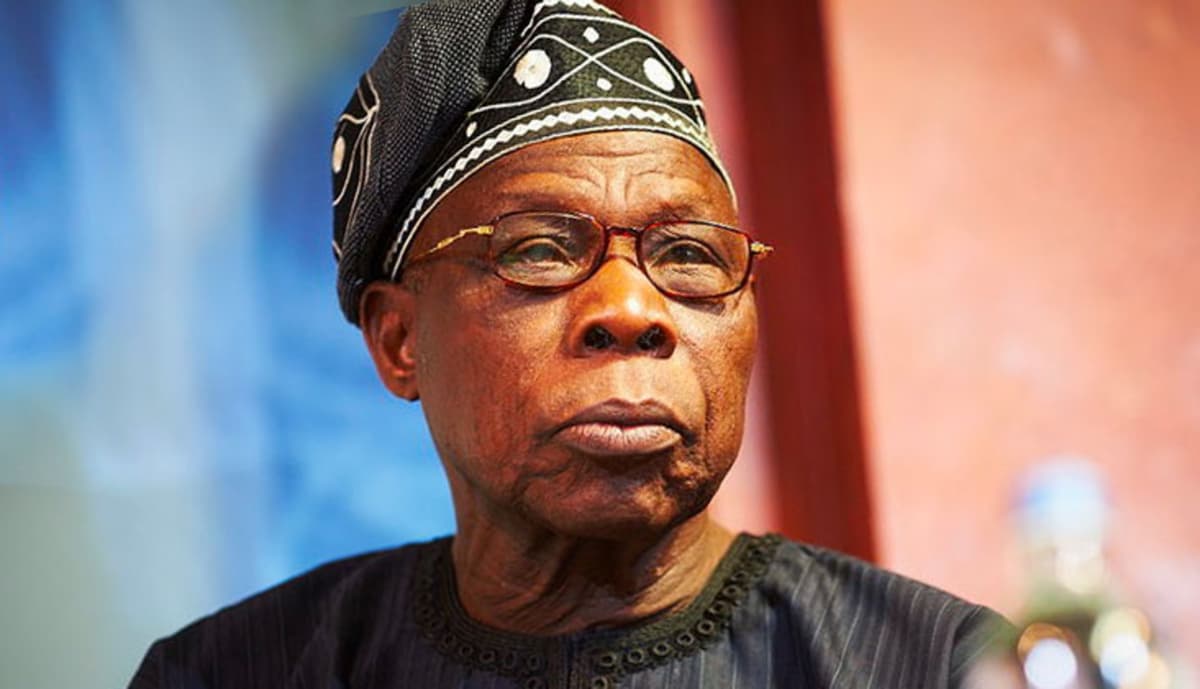
ABEOKUTA – Former Nigerian President Olusegun Obasanjo received a historical documentation work on the Asaba massacre of October 1967, delivered by the Isama Ajie of Asaba, Chief Chuck Nduka-Eze, on Wednesday, July 1, 2026, at the presidential library named after him in Abeokuta, Ogun State. On this occasion, the former head of state warned that many factors that led to the Nigerian civil war of 1967-1970 are still present in the country’s institutions and among its population.
The presented work, titled Asaba Massacre, compiles a published transcript and an audiovisual documentary based on eyewitness testimonies, archives, recorded interviews, and historical research. Obasanjo, who commanded federal troops during the civil war, stated that he had always avoided commenting on the Asaba massacre on the grounds that the area was under the command of General Murtala Muhammed, who was killed in a coup in 1976 and has since been elevated to a national figure. “When people talk about the Asaba massacre, I always acknowledge that I cannot provide the details,” he said.
However, he recounted intervening personally during the war to prevent a soldier from raping a woman in Asaba, emphasizing that such acts engage the responsibility of command.
A Long-Hidden Massacre
The Asaba massacre took place from October 5 to 7, 1967, four months after the start of the civil war between the Nigerian federal government and the self-proclaimed Republic of Biafra. Federal troops of the 2nd Infantry Division, commanded by Colonel Murtala Muhammed, entered Asaba on October 5, as Biafran forces had just blown up the eastern spans of the Onitsha bridge to prevent their pursuit. Asaba, a city predominantly Igbo but remaining in the federation and committed to the principle of national unity, organized a civil procession on October 7 to display its loyalty to the federal government, its residents parading in traditional white attire while singing “One Nigeria.”
According to testimonies gathered by researchers and survivors, federal soldiers separated men and boys from women and children at a crossroads before opening fire with machine guns. The death toll cannot be accurately established, with academic sources estimating a range from several hundred to over a thousand male civilian casualties. Nduka-Eze indicated during the presentation that available evidence pointed to the death of more than a thousand civilians. The massacre, never officially recognized by the Nigerian state nor pursued in court, was documented extensively in 2017 with the publication by Cambridge University Press of the reference work The Asaba Massacre: Trauma, Memory, and the Nigerian Civil War, written by Elizabeth Bird and Fraser Ottanelli.
“We Have Already Fought One Civil War Too Many”
Speaking after the document presentation, Obasanjo expressed his concern over the current situation in Nigeria. “Some of the things that led to the civil war are still there. How much longer will they accompany us?” he said. Recalling a remark by former head of state Yakubu Gowon, he added that Nigeria would not survive a second civil war: “We have already fought one civil war too many.”
The former head of state, who led Nigeria from 1999 to 2007 as a civilian president after being a military head of state from 1976 to 1979, emphasized the need to document the tragic events of the war to prevent their recurrence. “We take pride in preserving the past, grasping the present, and inspiring the future. Thank you for making this story known, so that people can learn it and commit to ensuring it never happens again. I say: never,” he concluded.
Nduka-Eze also noted that the conditions leading to the civil war – particularly ethnic distrust among Nigeria’s communities – largely remain unresolved. The Nigerian civil war, also known as the Biafra war, lasted from July 6, 1967, to January 15, 1970, resulting in one to three million deaths, mostly civilians, according to historical estimates.
Related Articles
 Burkina Faso recognizes 315 martyrs and 10 disabled individuals, opening rights for their families
 In Benin, 46% of citizens have considered leaving the country in 2024-2025
 Somalia: 26,000 displaced from Baidoa face famine risk by December
 2nd edition of the Mangal Festival: science, culture, and local knowledge mobilized to preserve the Mono Delta
Comments
Comments load when you reach this section.