
Macron’s Speech at the UN: The Trial of the “Double Standard” Caught Up by the African File
Emmanuel Macron denounced on Tuesday, September 22, at the podium of the 81st United Nations General Assembly in New York, the “perpetual temptation of double standards” in international relations. The French president presented this refusal as his second principle, believing that double standards divide the planet and undermine the credibility of the coherence of the international order and the Charter.

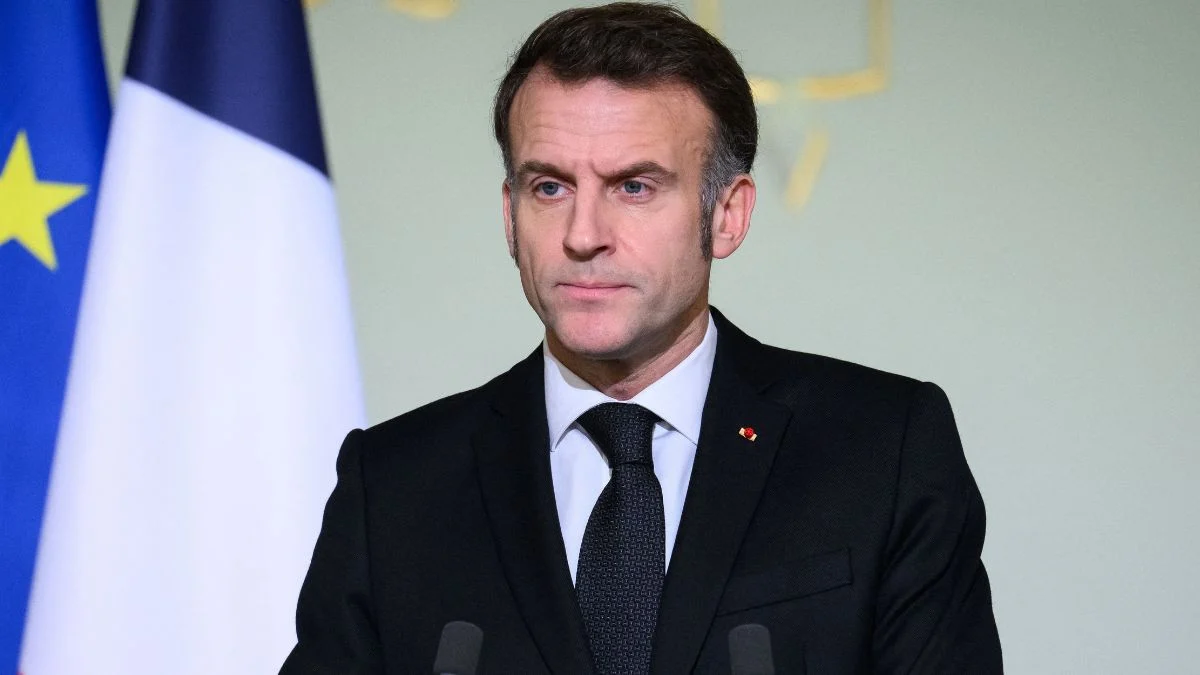
The head of state stated that the sovereignty of peoples cannot be valid in Europe and optional in the Middle East or Africa. He added that the powers that have sought to “replace the people to change such a regime” have plunged these states “into even greater chaos.” “One life equals one life,” he declared.
The speech was part of a broader attack against power dynamics. Targeting the United States, Russia, and China, it condemned those who seek to expand their borders at the expense of international order or to control the sovereignty of peoples. Regarding Ukraine, he promised “unwavering” support for Kyiv while calling for swift negotiations with Moscow, and advocated for a dual moratorium on strikes targeting Russian and Ukrainian energy sites.
The previous Nigerien
On the African continent, this advocacy faces the recent memory of the Nigerien crisis. Following the overthrow of Mohamed Bazoum on July 26, 2023, Emmanuel Macron described the coup as illegitimate and dangerous for the region, and assured that France would support ECOWAS in the decisions it would make.
Paris had gone further at the end of August. The French president had declared support for the diplomatic action of the regional organization and, if it so decided, its military action. He had also denied any legitimacy to the military and indicated that France would make its decisions regarding Niger based on its discussions with Mohamed Bazoum. The junta saw this as neocolonial interference.
The intervention never took place. Paris eventually announced in September 2023 the withdrawal of its troops and its ambassador, whom it had until then refused to recall on the grounds that it did not recognize the coup leaders. This episode remains, however, for part of West African public opinion, an illustration of a France willing to endorse the use of force to restore an ally.
Chad, Niger: double standards
The strongest criticism is not so much directed at Niger as it is at the asymmetry of treatment between military regimes. In April 2021, after the death of Idriss Déby Itno, Emmanuel Macron attended the funeral in N’Djamena and expressed his support for the Transitional Military Council led by Mahamat Idriss Déby, outside the constitutional order provided for. Two years later, he denied any legitimacy to the military in Niamey.
This difference in treatment between an allied military power and a hostile military power precisely corresponds to the definition of the double standard that the president denounced in New York.
The argument of “regime changes” leading to chaos refers to a precedent that Paris knows well: the intervention in Libya in 2011, led primarily by France and the United Kingdom, the security consequences of which still weigh on the entire Sahel region.
Sovereignty, a contested argument
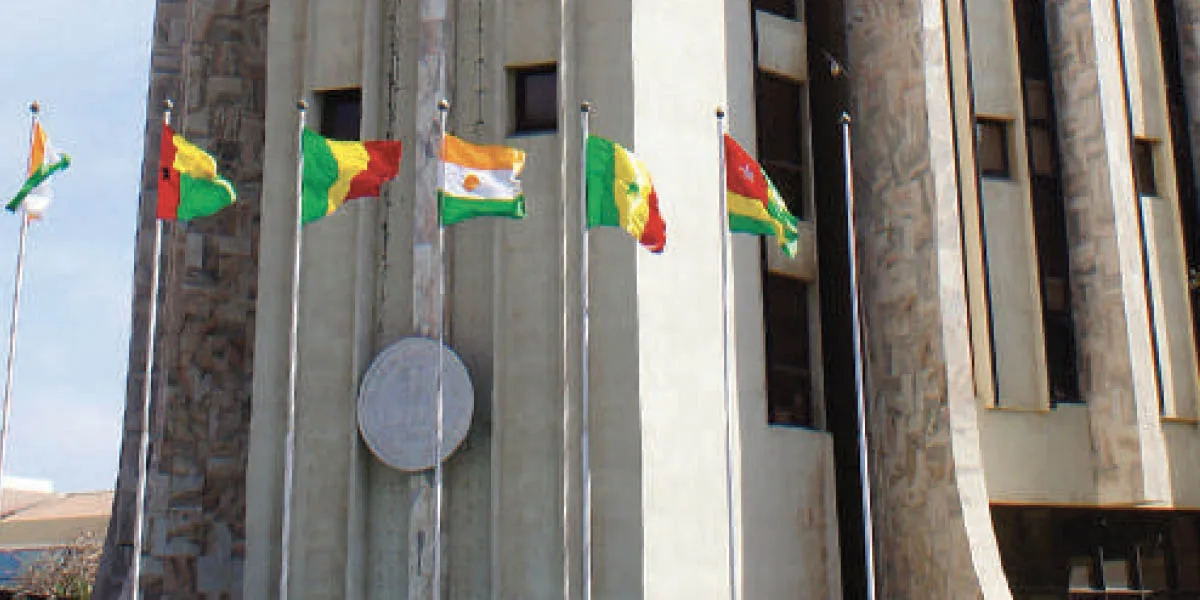
Reverse reading exists and deserves to be addressed. The governments of the Alliance of Sahel States (Mali, Burkina Faso, Niger) invoke the sovereignty of the people to justify their break with Paris. However, none of them have emerged from an election, and the transitions have been extended several times. Presenting their policies as “the choice of the populations” is therefore more a matter of political assertion than electoral reality.
Paris emphasizes that it has withdrawn its forces at the request of the relevant authorities and that it has not conducted any operations against these regimes. Emmanuel Macron had justified the departure from Niger by explaining that France would only intervene at the request of democratically elected powers and regional authorities. Regarding Gaza, the president can also point out that he initiated a movement for the recognition of the State of Palestine at the UN in 2025, and that he deemed the situation in the enclave this year as shameful for all.
A credibility to rebuild
The contradiction pointed out by its critics lies less in the stated principles than in the gap between these principles and the French practice over the past fifteen years in Africa. The speech in New York implicitly acknowledges this debt by establishing non-substitution to the peoples as a universal rule.
The concrete scope of this commitment will be measured on African soil, where the French military presence has significantly reduced since 2022 following the departures from Mali, Burkina Faso, Niger, and then Chad, Senegal, and Côte d’Ivoire. Paris no longer maintains a large permanent base on the continent except in Djibouti.

Comments
Comments load when you reach this section.