
Luc Gnacadja reveals his priorities after his first 100 days in office as mayor of Cotonou.
After his first months at the head of Cotonou, Luc Gnacadja places the reform of the municipal administration, the fight against flooding, mobility, cleanliness, and support for the local economy at the heart of his mandate. The mayor includes these projects in his roadmap “Cotonou 2026-2033: Changing Scale”.

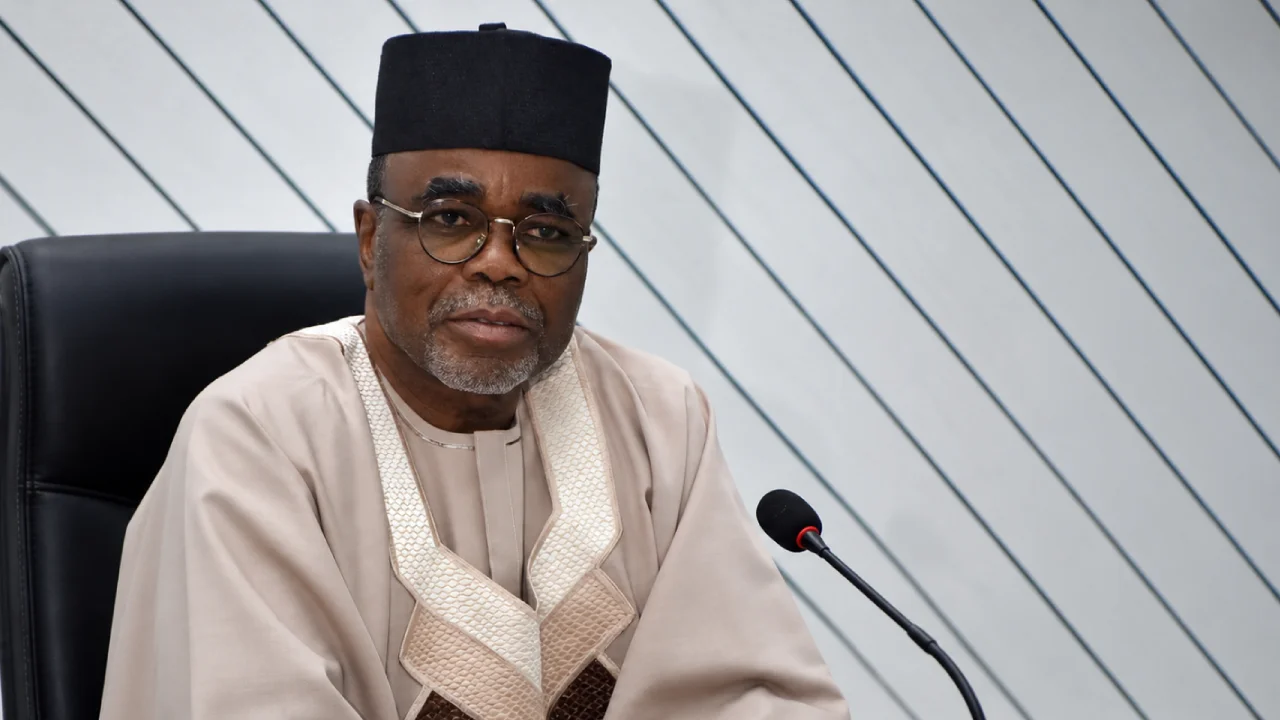
Luc Gnacadja claims to have dedicated his first 100 days as the mayor of Cotonou to preparing the necessary reforms for transforming the economic capital. In an interview with national television, the architect and former minister presented the main focus areas of his program for the next seven years.
The mayor does not wish to reduce this initial period to a list of visible achievements. “In 100 days, we laid the foundations of this transformation,” he stated. According to him, the urgency lies first in restoring the residents’ trust in municipal action and ensuring services are delivered within clearly defined timelines.
This ambition relies on seven levers aimed at making Cotonou a more resilient city, better governed, more productive, and more adapted to the needs of its residents. The chosen method combines administrative reform, local investments, and citizen participation.
A results-oriented municipal administration
The new municipal team has initiated an internal reorganization based on measurable objectives. The executive secretary has received a mission letter accompanied by performance and transformation indicators. These guidelines have been subsequently communicated to the technical departments, services, and divisions of the town hall.
Ultimately, each municipal service should be associated with a processing time. The town hall also plans to speed up the digitization of its services to allow residents to complete certain procedures without having to travel.
Cotonou residents should also be able to report problems on public roads, such as a damaged pavement, a broken drain cover, or issues related to living conditions. The municipality aims to enhance the use of the “229 Living Environment” app and develop a digital platform for the neighborhood chiefs.
In terms of land management, an audit is underway to identify and secure the city’s administrative reserves. According to Luc Gnacadja, initial checks have shown a number of reserves twice as high as what was initially communicated to the consultant.
The municipality also wants to reconcile and digitize the various land registries in collaboration with the National Land and Domain Agency. The goal is to secure municipal property and facilitate the issuance of documents like building permits.
The mayor believes that land security is an important condition for attracting private investments. He wants to reduce processing times for files and allow users to track their procedures without having to make multiple trips to the town hall.
Flooding, mobility, and cleanliness at the heart of priorities
Managing rainwater is one of the main projects of the new administration. The mayor explains that he anticipated the cleaning of the gutters after the announcement of earlier rains. During heavy rainfall on March 7, water would have receded in about two hours in several already developed areas.
However, Luc Gnacadja wishes to go beyond a purely defensive approach to flooding. He proposes preserving the natural water corridors and transforming some of these spaces into blue and green parks.
According to estimates presented during the interview, approximately 12,000 homes are permanently situated in lake areas or regularly flooded zones. The mayor wants to adapt urban policies to these neighborhoods, particularly by reflecting on the lake cadastre and the management of riverbanks.
Greening should accompany this strategy. Cotonou currently has about 80 hectares of green cover. The municipality aims to increase this area to 350 or 400 hectares by 2033, through parks, tree alignments, and spaces developed along natural water paths.
Interventions have already been carried out in several schools affected by flooding. With the primary school certificate approaching, the town hall had fifteen days to ensure that the classrooms for candidates were free of water. “No child should be taking the exam with their feet in the water,” insisted the mayor.
Mobility is another aspect of the program. Defective traffic lights need to be replaced as part of a centralized system covering Cotonou and Grand Nokoué. The works are scheduled for the second half of the year.
The town hall also wants to develop pedestrian pathways, with secure and tree-lined sidewalks, as well as waterway transport between Abomey-Calavi and Cotonou. For motorcycle taxi drivers, Luc Gnacadja advocates a gradual transition to electric vehicles, without excluding current players in the transport system.
The envisaged project relies on multimodal mobility allowing for the combination of motorcycle taxis, buses, and waterway transport. The municipality hopes that these different means will eventually be accessible through a common payment system.
In terms of cleanliness, monthly operations have started in some arrondissements. The city, however, acknowledges the inadequacy of trash bins in public spaces and plans to gradually install them in activity zones.
About a hundred public toilets will also be constructed in a first phase across 100 sites, representing nearly two-thirds of the 165 neighborhoods. A second phase will extend the system to the entire city, with additional facilities in high-traffic areas.
Local economy, funding, and heading towards 2030
Luc Gnacadja places significant importance on what he calls the “local economy.” According to figures mentioned during the interview, this sector concentrates about 90% of jobs and generates a significant portion of the city’s economic activity.
The town hall aims to support its players through professionalization, land security, localizing activities, and access to digital tools. It also plans to invest in secondary markets and district-level markets.
These infrastructures should be designed according to models that allow for maintaining operating costs accessible to traders. Part of the projects has been entrusted to the Real Estate and Urban Development Company.
To finance the overall program, the mayor acknowledges that the city’s current resources are still insufficient. He relies on increasing own revenue, the municipal investment fund, public-private partnerships, and funding from technical and financial partners.
The future bus station could thus be realized with the private sector, in order to reserve municipal resources for infrastructures less likely to attract investors, such as schools, health centers, and local facilities.
The 2026-2033 plan also aims to equip schools with media libraries facilitating students’ access to digital tools and artificial intelligence. The municipality also wants to improve internet access in markets and activity spaces.
Culture also holds an important place in the municipal strategy. The town hall wants to build a common identity around the history and characteristics of the 165 neighborhoods of Cotonou, through festivals, carnivals, and cultural meetings.
The horizon of 2030, the year of Cotonou’s bicentennial, should serve as a reference for this transformation. Luc Gnacadja hopes that the city becomes an African benchmark in terms of resilience, innovation, territorial development, and cultural attractiveness.
Related Articles
 White House: Judge reinstates CNN, MS NOW, and Politico for 14 days
 Senegal: Guy Marius Sagna accuses Macron of a ‘pact’ between Diomaye and Macky
 Guinea: Cellou Dalein claims his passport has been revoked, blocking his departure for the UN
 Nigeria: 61 public officials linked to $271 million in assets in the United States
Comments
Comments load when you reach this section.