
In Benin, how the Comlan Hugues Sossoukpè case is causing embarrassment for the justice system.
One year after his controversial arrest in Abidjan and his opaque transfer to Cotonou, the Beninese journalist Hugues Comlan Sossoukpè remains detained without trial in the civil prison of Ouidah. Caught in a neglected refugee status, suspicions of illegal exfiltration, challenged defense rights, and the referral of the ECOWAS Court of Justice by RSF, his case reveals the contradictions within the Beninese justice system.

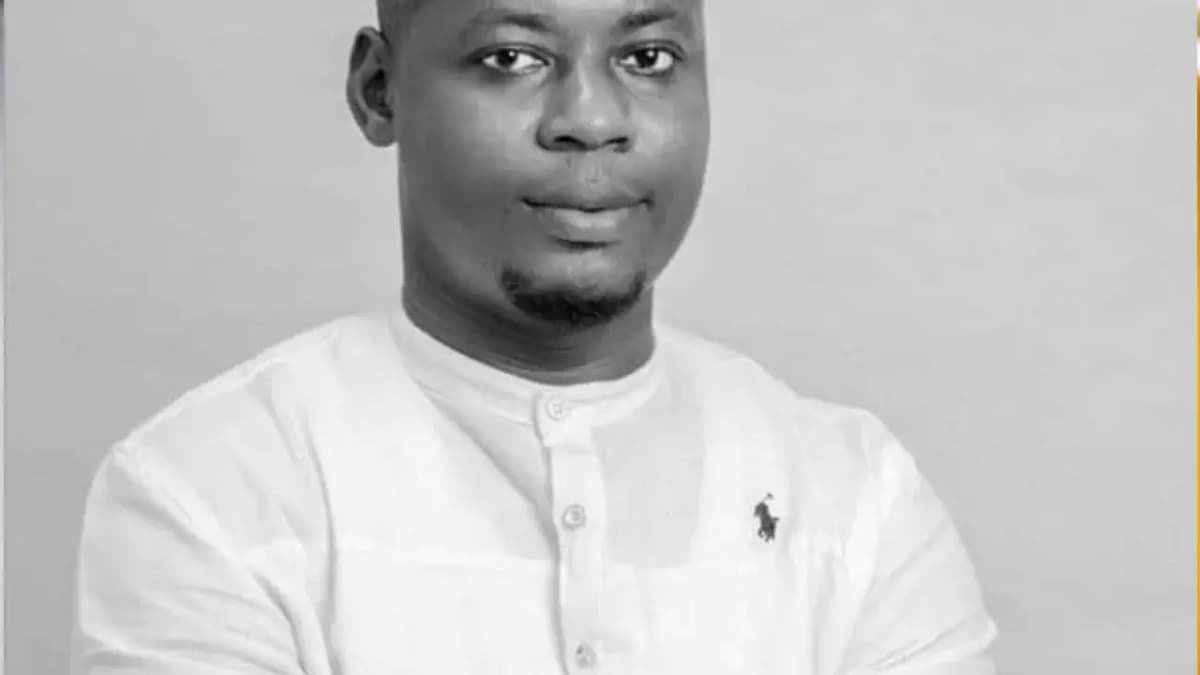
Since his dramatic arrest in Abidjan on July 10, 2025, the investigative journalist Hugues Comlan Sossoukpè has languished without trial in the civil prison of Ouidah. His case, marked by an opaque exfiltration from Côte d’Ivoire, an ignored refugee status, and detention conditions described as “inhumane” by his defenders, has become a litmus test of the growing tension between the Beninese state and international legal standards. A year after the events, the CRIET, an exceptional court at the heart of the repressive system, struggles to advance in the investigation, while Reporters Without Borders (RSF) has brought the case before the ECOWAS Court of Justice. The Beninese justice system thus finds itself doubly embarrassed by the procedural irregularities surrounding the case and by increasing international pressure.
Comlan Hugues Sossoukpè is an investigative journalist and whistleblower from Benin, director and founder of the online media Olofofo, known for its critical investigations against the regime of President Patrice Talon. He has also served as the secretary general and spokesperson of the Beninese Association of Web Activists (ABWA), an organization committed to promoting democracy and defending human rights.
His troubles with the Beninese authorities date back to the 2019 legislative elections, a poll boycotted by the opposition and marred by violence. Hugues Sossoukpè had helped document and denounce these irregularities, attracting the wrath of the authorities. Forced into exile, he settled in Lomé, Togo, where he obtained official political refugee status in November 2021, granted in accordance with the provisions of the Geneva Convention. His travel passport issued by the Togolese state explicitly mentioned this status.
From Lomé, Sossoukpè continued to run Olofofo, an online newspaper followed for its denunciations of dysfunctions within Beninese institutions. He notably reported testimonies from detainees denouncing the conditions of incarceration in Beninese prisons, which led to legal actions against prisoners accused of providing him with information. In March 2025, Olofofo was banned from publication in Benin by the High Authority of Audiovisual and Communication (HAAC).
The Trap of Abidjan
On July 8, 2025, Hugues Comlan Sossoukpè leaves Lomé for Abidjan on an Air Côte d’Ivoire flight. He is responding to an official invitation from the Ivorian Ministry of Digital Transition and Digitalization, which invited him, as a “recognized journalist in the sub-region,” to cover the first edition of the Ivoire Tech Forum, a regional salon on digital innovation scheduled for July 9-11, 2025. He is expected at his hotel, the Palm Beach, owned by the Military Provident Fund (FPM) of Côte d’Ivoire.
Nothing indicates the outcome to come. Sossoukpè had indeed confided to RSF in the months leading up to the trip of repeated threats against him, including on Togolese soil. He had even mentioned plans for his abduction to his close ones. However, the official invitation from a ministry of a third country seemed to offer a sufficient guarantee.
In the night of July 10 to 11, 2025, several police officers knock on his hotel room door. According to the account relayed to his lawyer Me Maximin Pognon, five individuals present themselves to him: four of them pretend to be Ivorian gendarmes, but Sossoukpè recognizes two as agents of the Beninese police. He demands to be taken before a judge. His interlocutors agree… but will not keep their promise.
His phone and computer are confiscated. He is briefly taken to the headquarters of an Ivorian gendarmerie service, before being directly transported to the VIP lounge of Félix Houphouët-Boigny International Airport. Without an Ivorian warrant, without presentation to an Ivorian magistrate, and without the possibility of contesting the procedure, he is put on a private plane chartered for the occasion, a Beechcraft 1900D, heading to Cotonou. The aircraft lands at 10 PM in Cotonou. Sossoukpè is disembarked, placed in police custody at the economic and financial brigade, before being presented the next day to an investigating judge who reads him the international arrest warrant issued by the CRIET.
RSF, which conducted a thorough investigation into the circumstances of his arrest, is categorical. According to the organization, Beninese police officers, dispatched to Côte d’Ivoire, themselves carried out the operation, with passive, if not active, complicity from their Ivorian counterparts. According to the organization, “no judicial police officer was present to oversee the arrest or extradition, and no judicial decision authorized it.” “Serious failings” were reported to the highest levels of the Ivorian state, and the officer in charge of monitoring the journalist was reportedly arrested after the incident.
The official Ivorian version, delivered with a thirteen-day delay by Communication Minister Amadou Coulibaly, is that the authorities in Abidjan “were unaware of his refugee status” and simply “executed a warrant in the name of judicial cooperation with Benin.” An explanation contradicted by his lawyers, who argue that Sossoukpè’s Togolese travel document “clearly stated his refugee status,” and that several human rights organizations qualify it as a pretext.
Serious Charges
On July 14, 2025, Hugues Comlan Sossoukpè is presented before the judge for freedoms and detention of the CRIET. At the end of the hearing, four charges are retained against him, including incitement to rebellion, incitement to hatred and violence, harassment via electronic communication, and apology for terrorism.
These charges are based on content published by Sossoukpè on his digital platforms. The prosecution claims that some of his statements “contained subversive remarks, likely to disturb public order” and have “fed social tensions, undermined national cohesion, and encouraged hostile behavior towards law enforcement.”
The charges rely primarily on the Digital Code of Benin (law n°2017-20 of April 20, 2018), whose articles related to electronic harassment and dissemination of false information provide for up to two years of imprisonment and fines that could reach ten million CFA francs. The MFWA (Media Foundation for West Africa) has denounced since 2023 the use of this code to convict journalists operating online, arguing that its overly broad terms encourage abusive interpretations.
The CRIET is, itself, an exceptional court created in 2018 to judge economic offenses and terrorist acts. Its increasing use against journalists and activists raises ongoing questions about its suitability to handle press offenses. In March 2026, the court sentenced another journalist, Pascal Mitowadé, to five years in prison for publications related to the attempted coup d’état of December 7, 2025, a punishment deemed disproportionate by observers.
Before the judge, Sossoukpè denied the facts and contested the legality of his arrest. He claimed, to the surprise of the audience, his Togolese nationality, suggesting that he had initiated a naturalization process in Togo, his country of asylum. His lawyer Me Barnabé Gbago stated that, regardless of his client’s nationality, “the rules of extradition were not respected” and described the method of his detention as “suspicious.”
Procedural Failures at the Heart of Judicial Embarrassment
The Sossoukpè case crystallizes a series of irregularities that put the Beninese judiciary in a delicate position regarding international law.
At the time of his arrest, Hugues Comlan Sossoukpè was benefiting from the political refugee status recognized by the UNHCR and materialized in his Togolese travel document. This status is protected by the 1951 Geneva Convention and its 1967 Protocol. The principle of non-refoulement, a cornerstone of refugee law, prohibits the return of a refugee to a country where his life or freedom would be threatened. His handover to the Beninese authorities constitutes, according to RSF and several human rights organizations, a flagrant violation of this principle.
The Ivorian law of 2023 on refugees is also explicit: “the refugee or asylum seeker cannot be turned back at the border, expelled, or subjected to any other measures tending to force him to return or remain in a territory where his life, physical integrity or freedom would be threatened.”
No bilateral extradition treaty formally linking Benin and Côte d’Ivoire in this type of context has been satisfactorily invoked. The normal extradition procedure requires, in all cases, the presentation of the suspect to a judge in the transit country, the possibility for the person concerned to contest the measure, and a judicial decision authorizing the transfer. None of these steps were respected. The Beninese government spoke of “cooperation between two countries according to the rules of art,” but this assertion is contradicted by RSF’s investigation, which concludes it was an “abduction” rather than an “extradition.”
During the first six months of detention, Sossoukpè was placed in strict isolation according to his loved ones. No visits from family, no visits from his lawyers had been authorized. It was only at the end of December 2025, five and a half months after his incarceration, that a lawyer was able to speak with him for a few minutes, just before the hearing on December 26, 2025. The next hearing, set for January 12, 2026, took place without the defense being informed, according to Front Line Defenders, depriving Sossoukpè of legal representation at a crucial stage: that of the extension of his pre-trial detention. Front Line Defenders explicitly notes that “the extension of detention violates national legislation.”
International Escalation
From the first hours following his arrest, international mobilization took place. The Committee to Protect Journalists (CPJ) called for Sossoukpè’s release as early as July 17, 2025, denouncing the “worrying message sent to journalists in the region.” The International Federation for Human Rights (FIDH) and the OMCT co-signed an urgent appeal classifying the case as “kidnapping/refoulement/arbitrary detention/judicial harassment.” Front Line Defenders issued multiple statements calling for the immediate release of the journalist. Global Voices pointed out the implications for the safety of refugee journalists across the continent.
On July 16, 2025, just six days after Sossoukpè’s arrest, a second journalist, Ali Moumouni, identified as a collaborator of Olofofo since September 2024, was arrested in Cotonou while participating in a training session at a school, “without warrant or official reason,” according to RSF. He was placed under detention by the CRIET on July 21, 2025, facing five charges similar to those of his colleague, including “incitement to violence and rebellion,” “harassment via electronic communication,” and “apology for terrorism.” His first substantive hearing did not take place until March 2026, eight months after his incarceration.
The case took on new dimensions on January 25, 2026, when Me Dossou Stanic Adjacotan, one of the lawyers on Sossoukpè’s defense team, was arrested at Cotonou’s Cardinal Bernardin Gantin International Airport upon his return from a trip. He was brought before the CRIET on January 30, 2026, charged with “apology for coup d’état” in connection with the attempted coup of December 7, 2025. Front Line Defenders stated that “no evidence justifies the charges against the lawyer” and expressed concern that he would face reprisals for his defense work.
The decisive turning point occurred on April 24, 2026, when Reporters Without Borders filed, through its lawyer Me Koffi Sylvain Mensah Attoh, a request before the ECOWAS Court of Justice against Benin and Côte d’Ivoire. In its complaint, RSF denounces the role of Côte d’Ivoire in violating the right to the protection of refugees and press freedom, by handing Sossoukpè to the Beninese authorities outside any legal framework; the role of Benin as the instigator of the kidnapping operation, as well as the arbitrary detention of Sossoukpè and Moumouni; the request that the West African jurisdiction “recognizes the serious violations of rights committed” and orders the immediate release of the two journalists.
For Arnaud Froger, head of RSF’s investigation unit, “kidnapping, exfiltration on a private plane, arbitrary detention, search for sources and arrest of a presumed collaborator… RSF’s investigations have revealed the dark maneuvers of the Beninese and Ivorian states.”
A Broader Context
The Sossoukpè case does not emerge in a vacuum. It is part of a continuous deterioration of press freedom in Benin since Patrice Talon’s rise to power in 2016. That year, the country was ranked 78th out of 180 in the RSF index. Ten years later, in 2026, it occupies 113th place having lost 21 places in a year (92nd in 2025 to 113th in 2026), with an overall score of 47.39 compared to 54.60 in 2025. RSF explicitly cites the Sossoukpè case as one of the causes of this decline: “The authorities even go so far as to hunt down critical journalists, like Hugues Comlan Sossoukpè, founder of the online media Olofofo, who was abducted in Côte d’Ivoire before being extradited to Benin.”
The CRIET, an anti-corruption court repurposed as a tool for suppressing press offenses, is at the center of concerns of organizations defending freedom of expression. In 2023, a web radio journalist was sentenced to one year in prison with a suspended sentence for publishing an investigation into extrajudicial executions. In March 2026, journalist Pascal Mitowadé was sentenced to five years in prison for relaying a coup announcement. This trend confirms that the CRIET has become, according to several analysts, an exceptional jurisdiction used to silence dissenting voices in the media.
The spokesperson for the Beninese government, Wilfried Léandre Houngbédji, maintained throughout the case that justice is following its course and that freedom of expression “also entails the duty to assume and prove one’s statements.” However, this official stance contrasts with the reality of a case where the investigation is at a standstill, defense rights have been violated according to several organizations, and pre-trial detention exceeds the limits set by national law.
What Outcomes?
Analysis shows that the Hugues Sossoukpè case seems to trap the Beninese justice system on several levels.
On a procedural level, the investigation of the case reveals contradictions that the CRIET cannot ignore. Hugues Sossoukpè claims refugee status recognized by an international body (the UNHCR), and the manner in which he was brought onto Beninese territory deprives the procedure of its formal legitimacy. Any conviction pronounced under these conditions would be exposed to annulment on appeal or censure by the ECOWAS Court of Justice.
On a political level, acquitting Sossoukpè would mean for the Beninese authorities to acknowledge that he was unjustly detained, thus validating the accusations of kidnapping made by RSF and human rights organizations. But keeping him in detention prolongs the international exposure of the country every day.
On a regional level, referring the case to the ECOWAS Court of Justice places Cotonou and Abidjan in an unprecedented position. If the West African jurisdiction were to acknowledge the alleged violations, it would be an unappealable condemnation for two member states of the community, with potential repercussions on their diplomatic credibility and commitment to human rights.


Comments
Comments load when you reach this section.