
Gaani 2026 in Nikki: the Beninese state plays a central role in the organization
The 2026 edition of the Gaani de Nikki benefits from increased involvement from the Beninese state. After officially allowing the festival to be organized, the government is overseeing several projects related to the imperial palace, the arena, and the ritual route. This intervention aims to improve the reception of participants while enhancing the cultural and tourist value of this centuries-old celebration.

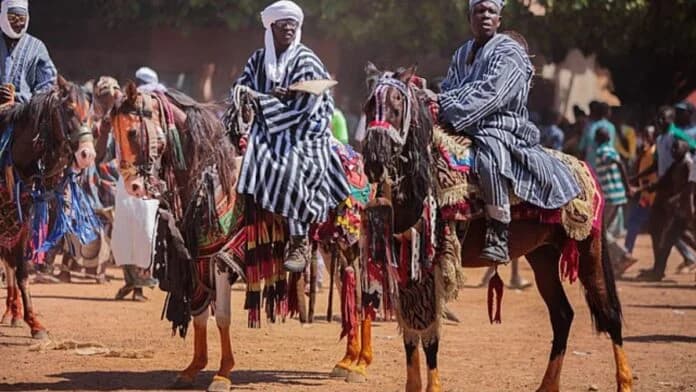
The Gaani de Nikki is scaling up in 2026. A few weeks before the festivities, the Beninese state now plays a central role in the material and institutional preparation for this significant event for the Baatonu, Boo peoples, and their allied communities.
The Council of Ministers on June 3, 2026, officially authorized the organization of the 2026 edition of the Gaani festival in Nikki. This decision places the event among the major cultural manifestations supported this year by the government, alongside the Porto-Novo Mask Festival and the International Days of Remembrance of the Slave Trade and its Abolition in Ouidah.
This involvement does not imply that the state is replacing the imperial court in the ritual and traditional dimensions of the Gaani. The schedule and ceremonies remain closely tied to the imperial authority of Nikki, while public intervention mainly focuses on general organization, infrastructure, security, and tourism promotion.
The imperial court had announced the dates of the 2026 edition as part of its traditional calendar. The festivities are scheduled from August 25 to 27, with August 26 being the central day of the Gaani.
Imperial Palace, Arena, and Ritual Route at the Heart of the Preparations
The state’s commitment was first demonstrated in March with the launch of a program to requalify the ritual route. The government emphasizes that the Gaani is one of the main manifestations of the intangible cultural heritage of Benin.
The construction of the new imperial palace has led to a modification of the traditional route, now organized around eight sacred stations instead of seven. The government has therefore decided to rearrange the different stages to preserve the coherence of the ritual, secure movements, and enhance the tourist attractiveness of the event.
In May, new works were also authorized at the royal palace of Nikki and in the Gaani arena. They include the reconfiguration of certain spaces, the construction of housing for maintenance teams, as well as the establishment of a stable and storage facilities.
This mobilization continued on July 16 with the visit to Nikki of a delegation composed of ministers responsible for Culture, Tourism, Interior, and Communication. Before inspecting the sites, the government members met with Emperor Séro Torou Tuko Sari and the heads of the imperial court.
The companies responsible for the works have committed to completing the projects no later than August 23, a few days before the festivities begin.
This organization reflects a distribution of roles between the state and traditional authority. The imperial court remains at the center of the rites, their calendar, and their cultural significance, while the government takes on an increasingly significant part of the infrastructure, logistics, and promotion of the event.
Traditional authorities have welcomed the executive’s involvement. During the government mission in July, the imperial court praised the investments made in the preservation and enhancement of the traditions of Nikki.
The Gaani is both a festival of allegiance to the sovereign of Nikki and an important identity gathering of the Baatonu, Boo peoples, and allies. The increased state involvement in 2026 aims to link the preservation of this traditional dimension with a broader strategy for cultural and tourist development.

Comments
Comments load when you reach this section.