
ECOWAS: the final communiqué of the meeting of heads of state published
At the end of their ordinary summit held on 19 July 2026 in Freetown, Sierra Leone, the ECOWAS Heads of State and Government adopted a final communiqué setting out the organisation’s main orientations for the coming months. Security, regional integration, governance and institutional reforms were among the topics addressed.

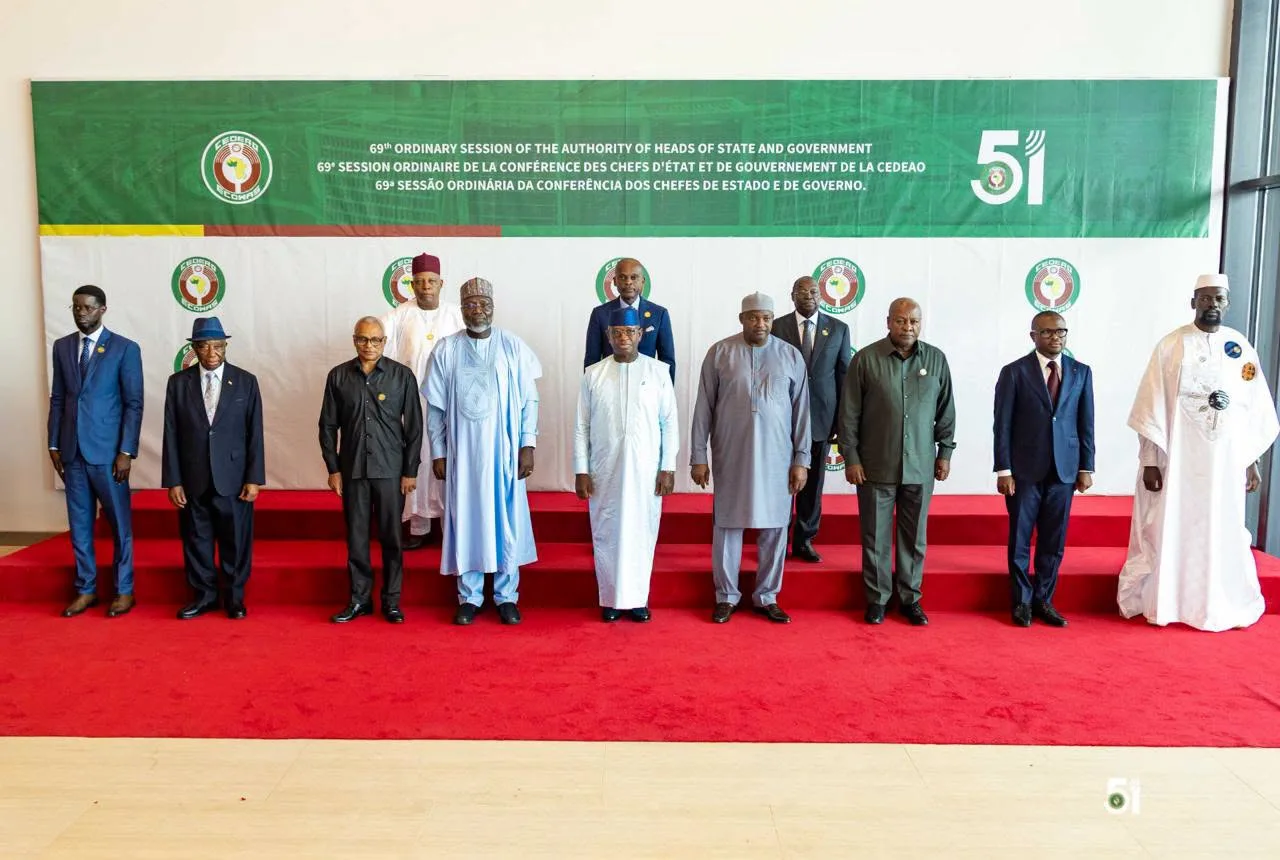
Meeting on Sunday 19 July 2026 in Freetown, Sierra Leone, the Heads of State and Government of the twelve member countries of the Economic Community of West African States (ECOWAS) concluded their work with the adoption of a final communiqué.
The meeting, chaired by Sierra Leonean Head of State Julius Maada Bio, allowed West African leaders to examine the main challenges facing the sub-regional organisation, including issues of security, political stability, economic integration and cooperation among member states.
Final communiqué
- The sixty-ninth ordinary session of the ECOWAS Conference of Heads of State and Government was held on 19 July 2026 in Lungi, Sierra Leone, on the sidelines of the Summit on the Future of Regional Integration in West Africa, under the chairmanship of H.E. Dr Julius Maada Bio, Chairman of the ECOWAS Conference of Heads of State and Government and President of the Republic of Sierra Leone.
- The Summit recorded the participation of the following Heads of State and dignitaries:
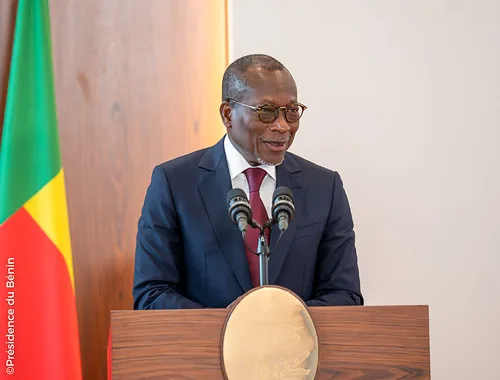
H.E. Romuald Wadagni, President of the Republic of Benin;
H.E. José Maria Pereira Neves, President of the Republic of Cabo Verde;
H.E. Adama Barrow, President of the Republic of The Gambia;
H.E. John Dramani Mahama, President of the Republic of Ghana;
H.E. General Mamady Doumbouya, President of the Republic of Guinea;
H.E. Joseph Boakai, President of the Republic of Liberia;
H.E. Bassirou Diomaye Faye, President of the Republic of Senegal;
H.E. Julius Maada Bio, President of the Republic of Sierra Leone;
H.E. Tiémoko Meyliet Koné, Vice-President of the Republic of Côte d’Ivoire.
H.E. Kashim Shettima, Vice-President of the Federal Republic of Nigeria
H.E. Robert Dussey, Minister of Foreign Affairs, Regional Integration and Togolese Abroad of the Togolese Republic.
- Also taking part in the session:
H.E. Mohamed Ould Ghazouani, President of the Islamic Republic of Mauritania;
H.E. Omar Alieu Touray, President of the ECOWAS Commission;
H.E. Amina J. Mohammed, Deputy Secretary-General of the United Nations; H.E. Lansana Kouyaté, ECOWAS Chief Negotiator in charge of relations with the AES countries;
Dr Abdul Kamara, Acting Vice-President for Regional Development, Integration and Business Delivery, representing the President of the African Development Bank Group;
Amb. Baba Kamara, ECOWAS Special Envoy for Counter-Terrorism;
Hon. Musa Sillah, Chairman of the ECOWAS Trade Liberalisation Scheme Working Group;
- Mahamadou Gado, Commissioner for the Department of Economic Policies and Domestic Taxation, representing the President of the WAEMU Commission.
- The opening ceremony was marked by addresses from H.E. Dr Julius Maada Bio, Chairman of the ECOWAS Conference of Heads of State and Government, and H.E. Dr Omar Alieu Touray, President of the ECOWAS Commission.
- The Conference also received messages of support and solidarity from the following dignitaries:
H.E. Mohamed Ould Ghazouani, President of the Islamic Republic of Mauritania;
H.E. Amina J. Mohammed, Deputy Secretary-General of the United Nations;
Dr Abdul Kamara, Vice-President of the African Development Bank Group; and
Mr Alhaji Aliko Dangote, Chairman of the ECOWAS Business Council.
- With regard to the Pact for the Future of Regional Integration, and in view of the rapidly evolving regional and global geopolitical landscape, the ECOWAS Conference of Heads of State and Government solemnly adopted the Declaration of Commitment, thereby reinforcing the Heads of State’s collective determination to consolidate regional unity, guarantee lasting peace and accelerate sustainable development within ECOWAS and the West African Community.
- The Conference took note of the 2026 Interim Report on the State of the Community presented by H.E. Dr Omar Alieu Touray, President of the ECOWAS Commission, as well as the reports of the 56th ordinary session of the ECOWAS Mediation and Security Council and the 96th ordinary session of the ECOWAS Council of Ministers, presented by the Chairman of the ECOWAS Council of Ministers and Chairman of the ECOWAS Mediation and Security Council, H.E. Alhaji Musa Timothy Kabba, Minister of Foreign Affairs and International Cooperation of the Republic of Sierra Leone.
- The Conference also took note of the report of the 13th session of the ECOWAS Convergence Council, presented by the Chairman of the Committee, Mr Sheku A. Fantamadi Bangura, Minister of Finance of the Republic of Sierra Leone.
- The Conference commended the quality of the reports and the relevant recommendations contained therein, aimed at consolidating political stability, peace and security and deepening the process of economic and monetary integration within the region.
- The Conference further commended the ECOWAS Commission, the other Community institutions and the member states for the resilience they demonstrated in sustaining regional integration efforts amid a difficult global economic and geopolitical context.
- The Conference, having adopted the main recommendations set out in the reports, examined the specific issues raised therein and took the following decisions:
II- ON ECONOMIC AND SOCIAL PERFORMANCE
On Macroeconomic Outlook
- The Conference took note of the resilience of ECOWAS economies in 2025 and the favourable outlook for 2026, which point to the continuation of a positive economic trajectory across the Community. This outlook remains favourable, as evidenced by falling inflation, a reduction in the public debt-to-GDP ratio, and a strengthening of the current account surplus, despite a deterioration in the fiscal deficit.
On the ECOWAS Single Currency Programme
- The Conference reiterated its firm commitment to the launch of the ECO in 2027 as an essential instrument for deepening regional economic integration and promoting sustainable, resilient and inclusive growth within the Community. In this regard, the Conference decided that the launch of the ECO will begin with countries that meet the defined convergence criteria and are ready to take part. At the same time, appropriate support will be provided to countries that are not yet ready, in order to facilitate their subsequent adoption of the single currency. The Conference further commended the ECOWAS Commission for the ongoing high-level consultations with the Governors of member states’ Central Banks aimed at reaching consensus on the outstanding issues essential to the introduction of the ECO in 2027. The Conference also welcomed the registration of the “ECO” trademark with the African Intellectual Property Organization (OAPI).
- The Conference took note with satisfaction of the request by the Republic of Guinea to join the ECOWAS Single Currency Programme Presidential Task Force.
- The Conference approved this request and further directed the ECOWAS Commission to make all necessary arrangements to convene a meeting of the Presidential Task Force on the ECOWAS Single Currency Programme, before the ordinary summit of December 2026, in collaboration with the President of the Republic of Côte d’Ivoire, the only remaining serving member of the Presidential Task Force.
- The Conference further directed the ECOWAS Commission, in collaboration with the West African Monetary Agency (WAMA), to intensify consultations with the Governors of member states’ Central Banks with a view to formulating consensus proposals on outstanding issues for consideration by the Presidential Task Force.
- The Conference directed the ECOWAS Commission to register the “ECO” trademark, as the designation of the ECOWAS single currency, with other competent regional and international intellectual property bodies.
On the Community levy
- The Conference expressed concern over the persistence of arrears owed under the Community levy and urged member states to fully honour their financial obligations as specified in the Protocol on the Community levy.
- The Conference further directed the Commission to intensify its discussions with member states on the implementation of the Protocol on the Community levy and to develop measures to ensure the sustainable financing of Community programmes and institutions.
On Food Security and Agricultural Development
- The Conference expressed concern over the food and nutrition situation in certain parts of the region and the impact of rising fertiliser prices on agricultural productivity. It welcomed the measures taken by member states and Community institutions to mitigate the effects of the fertiliser crisis and strengthen regional food security mechanisms.
- The Conference commended the progress made under the ECOWAS Rice Programme and called for the accelerated implementation of the Regional Rice Roadmap as part of efforts to reduce dependence on imports and achieve food sovereignty.
On the Free Movement of Persons and Goods
- The Conference reaffirmed its commitment to the ECOWAS Protocol on Free Movement of Persons, Right of Residence and Establishment, as a fundamental pillar of regional integration and one of the Community’s most significant achievements.
- The Conference stressed the need to preserve the gains of regional integration, facilitate the free movement of persons and goods, and promote cross-border trade and economic cooperation in the interest of Community citizens.
- The Conference further reaffirmed that the ongoing discussions with the
AES states should help preserve regional mobility, economic exchange and people-to-people relations across West Africa.
On Regional Trade
- The Conference noted that the proliferation of bilateral trade agreements signed by individual member states risks undermining the ECOWAS customs union. It calls on member states to refrain from concluding agreements incompatible with their obligations under the ECOWAS Revised Treaty and directs the Commission to ensure coordination of common Community positions on matters relating to international negotiations with third parties, in order to promote and safeguard the region’s interests.
On Regional Infrastructure
- The Conference directed the ECOWAS Commission to urgently develop a comprehensive pipeline of investment-ready strategic regional infrastructure projects capable of attracting financing from regional and international development finance institutions, sovereign wealth funds, private investors and other partners. The Conference directed the Commission to prioritise projects in the fields of transport, energy, digital connectivity and water infrastructure, and to submit an annual report on progress in project preparation, financing and implementation.
On Energy and Regional Connectivity
- The Conference welcomed the signing of the Intergovernmental Agreement on the Atlantic Africa Gas Pipeline (AAGP) and reaffirmed its support for this project as a strategic initiative aimed at strengthening regional energy security, industrialisation, economic integration and sustainable development in West Africa.
- The Conference welcomed the cooperation between the member states of
ECOWAS and the Kingdom of Morocco in promoting the Atlantic Africa Gas Pipeline and highlighted its potential to improve regional connectivity, expand access to energy, boost investment and contribute to achieving the objectives of the ECOWAS Vision 2050.
On Air Transport
- The Conference reiterated its determination to continue efforts to reduce the cost of air transport in West Africa. The Conference noted and commended the fact that Côte d’Ivoire is the only member state to have abolished the applicable taxes. The Conference invited other member states to accelerate national processes, including inter-sectoral consultations, the revision of relevant tax laws, awareness-raising among stakeholders and airport service providers, and to comply with the Conference’s decision on air transport taxes and on reducing passenger and security charges.
- The Conference thanked the Commission for the effective establishment of the ECOWAS Regional Air Transport Economic Oversight Committee, which is responsible for monitoring and conducting high-level consultations with member states to accelerate the uniform implementation of this decision.
- The Conference finally invited the ECOWAS Bank for Investment and Development (EBID), the African Development Bank, Afreximbank and other development partners to collaborate with the ECOWAS Commission to mobilise multilateral financing for air transport infrastructure and services, benefiting member states that take steps to comply with the ECOWAS decision aimed at making air transport more affordable and accessible to Community citizens.
On Digital Transformation
- The Conference adopted the revised Supplementary Act on the protection of personal data within the ECOWAS region, in accordance with the recommendation of the Council of Ministers. It further welcomed the Council’s adoption of several regional instruments in the areas of open data, electronic communications, digital governance, roaming and cybersecurity, and approved the establishment of the Regional Cybersecurity Coordination Mechanism.
On Gender Equality
- The Conference adopted the Presidential Declaration on Promoting Gender Parity in Political Representation among ECOWAS member states, as a flagship, lasting-impact initiative of the ECOWAS Golden Jubilee celebrations.
- The Conference reaffirmed its commitment to promoting women’s participation in political and public life and urged member states to strengthen measures to increase women’s representation in decision-making bodies.
III – ON PEACE, SECURITY AND POLITICAL STABILITY On the state of democracy, peace and security in the region
- The Conference of Heads of State and Government notes with satisfaction the steady progress made in consolidating democracy and political governance, as well as the region’s relative stability and resilience, amid growing geopolitical and geostrategic pressures. It commends the commendable efforts made by member states and the ECOWAS Commission towards consolidating democracy, peace and security, and maintaining social cohesion and stability in the region. In this regard, the Conference decides as follows:
On the political situation in the region:
On Guinea-Bissau
- The Conference takes note of the ongoing efforts in Guinea-Bissau to complete the country’s political transition through a constitutional referendum scheduled for 30 August 2026, and the holding of general elections on 6 December 2026. It urges the authorities to ensure the transparency and inclusiveness of these crucial processes. Specifically, the Conference calls on the transitional regime in Guinea-Bissau to prioritise inclusiveness in all processes leading to the swift restoration of constitutional order.
- To this end, the Conference invites all stakeholders to show flexibility, create the conditions for constructive and inclusive dialogue, and seize every opportunity to participate in the transition process in order to ensure a smooth return to constitutional order.
- The Conference also calls on the transitional authorities to guarantee strict respect for human rights, fundamental freedoms and judicial protections for all citizens of Guinea-Bissau, particularly those facing prosecution or charges related to events that occurred under the former regime. It further urges the authorities to unconditionally release all political figures still in detention, including the PAIGC opposition leader, as a gesture of goodwill aimed at creating a climate more conducive to inclusive dialogue, reassuring the opposition and strengthening the credibility of the transition process.
- The Conference directs the Commission to continue its dialogue with the transitional authorities, political actors, civil society and all other stakeholders with a view to a credible transition to constitutional order. It also tasks the Commission with providing moral and security guarantees to all stakeholders, including through the ECOWAS Mission for Stabilisation Support in Guinea-Bissau (MASGB). Furthermore, the Conference tasks the Commission with providing technical support to Guinea-Bissau to facilitate and strengthen dialogue among stakeholders and ensure a peaceful transition as well as peaceful and inclusive electoral processes.
- The Conference designated Senegal as mediator for Guinea-Bissau to support dialogue efforts towards an inclusive and smooth transition to constitutional order.
On Sierra Leone
- The Conference welcomes the significant progress made by stakeholders in Sierra Leone in implementing the various resolutions set out in the Agreement for National Unity concluded between the Government and the opposition All Peoples’ Congress (APC) party, notably the recent rapprochement between the Government and that party, which paves the way for a lasting easing of socio-political tensions and the restoration of a calm political climate essential for the imminent electoral reforms ahead of the 2028 legislative elections. It further commends the statesmanlike gesture made by His Excellency President Julius Maada Bio in deciding to drop the charges against former President Ernest Bai Koroma in a spirit of reconciliation and national unity. It encourages the international moral guarantors to continue monitoring progress in implementing the agreement recently concluded between the parties, in close collaboration with the country’s Independent Commission for Peace and National Cohesion (ICPNC).
- The Conference urges all political actors to continue implementing the “Agreement for National Unity” and the recommendations of the Tripartite Committee’s report, and to place greater priority on dialogue and inclusive political engagement in carrying out constitutional, legal and electoral reforms, in accordance with the recommendations of the Tripartite Committee’s report. It also urges all parties to ensure inclusiveness and transparency in the preparatory processes for the upcoming general elections.
On Electoral Processes
- The Conference reaffirms its firm commitment to the principles of constitutional convergence set out in the 2001 Supplementary Protocol on Democracy and Good Governance, as well as in the resulting laws and frameworks. It takes note of the peaceful conduct of the presidential, legislative and general elections in Guinea, Benin, Cabo Verde and Côte d’Ivoire respectively.
- The Conference congratulates the Government and people of Benin on the smooth conduct of the presidential election of 12 April 2026 and extends its congratulations to H.E. Romuald Wadagni on his election as President of the Republic of Benin. The Conference also expresses its deep gratitude to the outgoing President, H.E. Patrice Talon, for his dedicated leadership and contributions to ECOWAS regional integration.
- The Conference congratulates the Government and people of the Republic of Guinea on the smooth conduct of the presidential and legislative elections held on 28 December 2025 and 31 May 2026 respectively. In this regard, it congratulates H.E. Mamadi Doumbouya on his election as President of the Republic of Guinea.
- The Conference takes note of the ongoing preparations for general elections in The Gambia and presidential elections in Cabo Verde. It tasks the Commission with continuing to provide the necessary support and accompaniment to member states preparing for elections in November and December 2026 and in early 2027, in order to guarantee inclusive, credible and peaceful outcomes.
- The Conference further directs the Commission to continue its efforts to strengthen and enhance the capacities of political parties in member states in order to achieve more refined internal democratic practices and issue-based programming. It also tasks the
Commission with continuing to support capacity-building for member states’ Election Management Bodies (EMBs) so that they can organise free, transparent and inclusive elections.
On Xenophobic Attacks in South Africa:
- The Conference notes with deep concern the ongoing xenophobic attacks in South Africa targeting people of African descent, particularly the degrading treatment inflicted on West African citizens, and expresses its firm condemnation of this recurring phenomenon.
- The Conference urges the South African authorities to immediately bring the situation under control and find a lasting solution, in order to ensure the safety and protection of West African nationals and all other African nationals residing in the country.
- The Conference decides to support Ghana’s initiative to place this matter on the agenda of the next African Union (AU) Conference of Heads of State and Government, with a view to in-depth discussion and finding a definitive solution.
On the Recent Land Border Disputes Along the Mano River Corridor and Efforts to De-escalate Rising Tensions:
- The Conference commends the authorities of Sierra Leone and Guinea for the partial reopening of the Yenga border, and further urges the Guinean authorities to fully withdraw their troops from the Yenga and Lofa areas, in accordance with the Tripartite Communiqué of 16 March 2026, within the framework of the Mano River Union (MRU), and to continue to prioritise diplomatic solutions for resolving border disputes.
- In this regard, the Conference directs the Commission to accelerate the completion of the ongoing technical assessment of current and potential friction points along the Liberia-Guinea border (Lofa) and the Sierra Leone-Guinea border (Yenga). It further tasks the Commission with subsequently formulating appropriate recommendations for an amicable and lasting settlement, and with continuing to work closely with the Mano River Union (MRU) Secretariat and other partners and stakeholders, including the African Union and UNOWAS, with a view to finding amicable and lasting solutions to all border disputes along the Mano River corridor.
On the Fight Against Terrorism and Other Security Threats
- The Conference expresses grave concern over the continued deterioration of the security situation across the region, particularly in the Sahel and the Lake Chad Basin, marked by attacks, kidnappings and destabilisation operations carried out by armed terrorist groups (ATGs), insurgents and bandits against communities and security forces, resulting in loss of life, destruction of property and mass displacement of populations.
- The Conference firmly condemns the attacks carried out by armed terrorist groups and their sponsors in the region and reaffirms its commitment to eradicating terrorism within the ECOWAS region. It commends the ongoing efforts made by member states and the Commission in the fight against terrorism.
- The Conference further welcomes the progress made in activating the Regional Counter-Terrorism Force, in particular the capability pledges made by member states, as well as the development of a roadmap for the Force’s deployment.
- The Conference urges member states that have not yet done so to promptly honour their commitments regarding the recovery of Community levy arrears earmarked for activating the regional counter-terrorism force by 2027. It directs the President of the Commission to engage with the member states concerned to accelerate the payment of outstanding Community levy arrears before the end of 2026.
- The Conference directs the President of the Commission to deepen dialogue with the AES countries with a view to establishing a pragmatic security cooperation mechanism, based on the shared objective of containing the spread of terrorism in West Africa.
- The Conference reiterates its call on the International Community, through the African Union and the United Nations Security Council, to urgently address the needs of terrorism-affected countries in the region in a coherent and coordinated manner, through financial support from mandatory United Nations contributions, in accordance with United Nations Security Council Resolution 2719 (2023).
- The Conference commends Amb. Baba Kamara, ECOWAS Special Envoy for Counter-Terrorism, for his tireless commitment and efforts to support member states and the Commission in the fight against terrorism. To this end, it renews the mandate of Amb. Baba Kamara, ECOWAS Special Envoy for Counter-Terrorism, for a further three-year term and directs the President of the Commission to provide him with the support necessary to carry out his mission.
- The Conference approves the revised roadmap for the operationalisation of the ECOWAS Standby Force’s counter-terrorism brigade, with its phased implementation timeline aimed at achieving full operational capability by July 2027. It tasks the Commission with facilitating consultations between the governments of Côte d’Ivoire, Ghana and Nigeria to agree on the location of the Force’s headquarters.
- The Conference firmly condemns the resurgence of banditry, kidnappings and abductions of schoolchildren, particularly in Northern Nigeria. The Conference expresses its solidarity with the people of the Federal Republic of Nigeria and commends President Bola Ahmed Tinubu for the swift measures taken to secure the release of the victims and for the measures put in place to curb this threat.
On the Humanitarian Situation in the Region
- The Conference further notes with grave concern the deterioration of the humanitarian situation in the region, resulting from conflicts, terrorism, population displacement, food insecurity and climate-related disasters; it particularly notes their devastating effects on women and children, the recruitment of children, child trafficking and exploitation, disruption of education, and limited access to housing, healthcare and livelihoods.
- The Conference commends the Commission’s humanitarian actions and tasks it with strengthening resource mobilisation to address urgent humanitarian problems in the region and with further reinforcing coordination among member states to facilitate safe access to education in emergency situations, in strict compliance with international humanitarian law. It further tasks the Commission with working, in collaboration with international partners, to facilitate the voluntary return of migrants in North Africa, particularly in Algeria, Libya and Tunisia, for humanitarian reasons.
On Relations with the Alliance of Sahel States (AES)
- The Conference extended the mandate of the Chief Negotiator, H.E. Dr Lansana Kouyaté, until December 2026. It reaffirmed that negotiations with Burkina Faso, Mali and Niger will take place exclusively as a unified bloc. Member states must refrain from concluding separate bilateral agreements that threaten ECOWAS cohesion.
- ON INTERNATIONAL COOPERATION
- The Conference expressed its thanks to development partners for their steady support for regional integration, peace, security and development programmes. The Conference extended special thanks to the Government of the People’s Republic of China for building and donating the new ECOWAS headquarters in Abuja, a gesture that constitutes a major contribution as well as a mark of solidarity and friendship. This support will strengthen regional cooperation and institutional development and will remain a lasting symbol of the strategic partnership between ECOWAS and the People’s Republic of China.
- ON INSTITUTIONAL MATTERS
On Appointments
- The Conference approves the recommendations of the ninety-sixth ordinary session of the Council of Ministers regarding appointments to statutory positions within Community institutions for the 2026-2030 term.
Regarding the Judges of the Community Court of Justice for the 2026-2030 term
- Ms Awa Bah (The Gambia);
- Ms Charlyne M. Brumskine (Liberia);
- Désiré Henri Aihou (Benin);
- Ms Henrietta Uzoamaka Didigu (Nigeria);
- Dr Yaouza Ouro-Sama (Togo).
Regarding the Commissioners of the ECOWAS Commission
- Political Affairs, Peace and Security: Ms Francess Piagie Alghali
(Sierra Leone);
- Economic Affairs and Agriculture: Dehpue Yenpea Zuo (Liberia);
- Internal Services: Dr Kalilou Sylla (Côte d’Ivoire);
- Infrastructure, Energy and Digitalisation: Amin Amidu Suleiman
(Ghana);
- Human Development and Social Affairs: Prof Nassirou Bako-Arifari (Benin).
Regarding Other Community Institutions
- Director General of the West African Health Organisation (WAHO):
Dr Palokinam T. Pitche (Togo);
- Director General of the Inter-Governmental Action Group against Money Laundering in West Africa (GIABA): Mam Cherno
Jallow (The Gambia);
- Auditor General of ECOWAS Institutions: Ms Carla Maria Borges Bettencourt (Cabo Verde).
- The Conference granted Nigeria’s request for an additional two weeks to review and resolve the matter of the Vice-Presidency allocated to Nigeria and to report back to the Commission.
- The Conference congratulates the successful candidates and urges them to carry out their duties with professionalism, integrity, accountability and dedication, towards achieving the Community’s objectives and aspirations, in accordance with the applicable legal texts.
Election of the New President of the Commission
- The Conference appointed H.E. General Birame Diop, of Senegal, as President of the Commission for the 2026-2030 term. The Conference expresses its confidence in the new President’s extensive diplomatic, military and strategic expertise, which will enable him to provide strategic leadership in deepening regional integration and addressing regional challenges.
Tribute to the Outgoing Leadership Team
- The Conference expressed its deep gratitude to H.E. Dr Omar Alieu Touray, outgoing President of the ECOWAS Commission, as well as to the other heads of institutions, commissioners and staff of ECOWAS institutions, for their dedication and outstanding service to the Community, despite the many challenges encountered over the past four years.
- The Conference commended their contribution to strengthening regional integration, promoting peace and security, and implementing the ECOWAS Vision 2050 agenda.
- ON THE HARMONISATION OF ECOWAS POSITIONS ON
CANDIDATURES WITHIN INTERNATIONAL ORGANISATIONS
- The Conference welcomes the spirit of solidarity shown by member states in supporting regional candidatures and lends its support to the candidacy of the Republic of Sierra Leone for the post of Judge at the International Court of Justice for the 2027-2036 term.
- ON THE ELECTION OF THE NEW CHAIRMAN OF THE
ECOWAS CONFERENCE OF HEADS OF STATE AND GOVERNMENT
- The Heads of State and Government elected H.E. Bassirou Diomaye Faye, President of the Republic of Senegal, as the new Chairman of the ECOWAS Conference of Heads of State and Government, for a one-year term.
IX- DATE AND VENUE OF THE NEXT SUMMIT
- The date and venue of the seventieth (70th) ordinary session of the ECOWAS Conference of Heads of State and Government will be communicated later, following consultation with the Heads of State and Government.
X- VOTE OF THANKS
- The Heads of State and Government expressed their deep gratitude to H.E. Dr Julius Maada Bio, and to the Government and people of Sierra Leone, for their warm hospitality and the world-class facilities made available to them in Lungi. They particularly commended H.E. Dr Julius Maada Bio‘s remarkable commitment to regional integration and his exemplary leadership in conducting the affairs of the Community over the past year.
Comments
Comments load when you reach this section.