
“Don’t impose anything on them,” Oligui Nguema advocates for an inclusive approach towards AES.
From Libreville, Brice Oligui Nguema is urging Africa to change its approach towards the countries of the Sahel States Alliance (AES). In a statement on France 24, the Gabonese president advocated for support without arrogance or demands, arguing that transitional leaders should be treated as full-fledged heads of state in order to build African solutions to African crises.

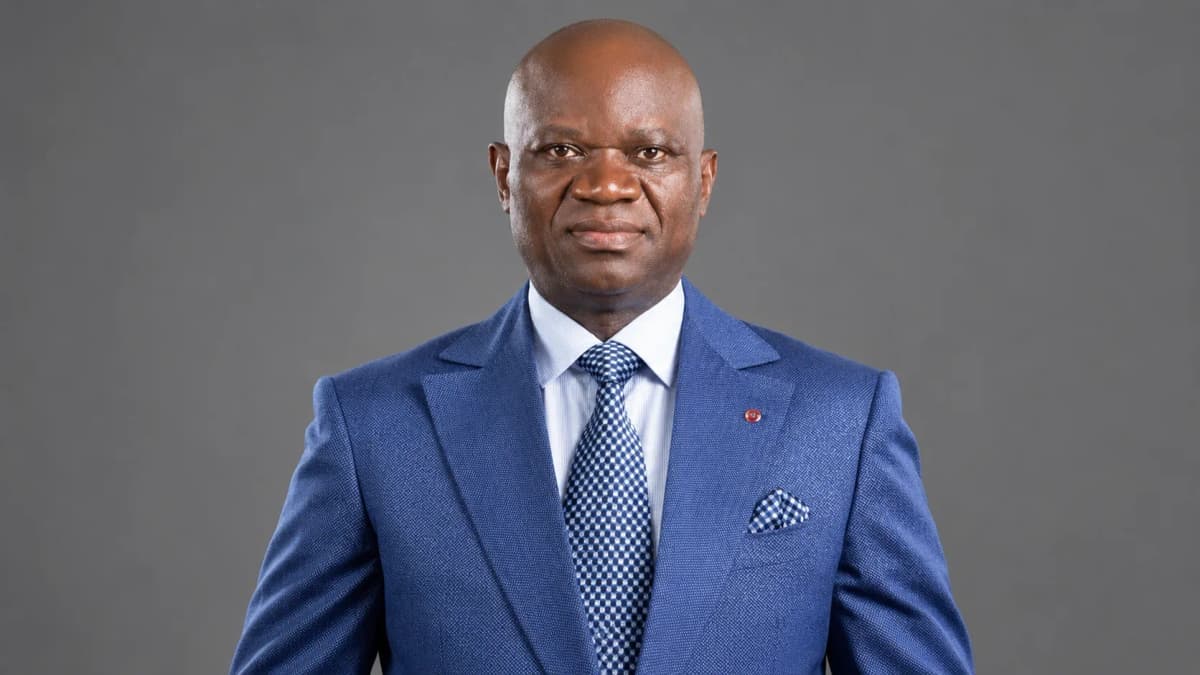
The Gabonese president Brice Oligui Nguema called on Wednesday, June 3, 2026, during a statement on France 24, for an inclusive approach towards the countries of the Sahel States Alliance (AES), without condemning their choice to break away from regional institutions. “Do not impose anything on them. Let’s find models. How to support them in easing tensions without frustrating them, without looking down on them. No, that no longer works,” he stated. He expressed his central position in direct terms: “You cannot impose on a head of state, whether in transition or not; they remain a head of state of their country.”
Oligui Nguema concluded his statement with a call to the African Union: “These are African problems and we will find African solutions. We need to support them. What we can do is provide advice.”
These statements come on the heels of the visit of Beninese president Romuald Wadagni to Niamey and Ouagadougou – two capitals of the AES – and just weeks before the fifth meeting of ECOWAS mediator Lansana Kouyaté, who has begun a tour in the countries of the Alliance. They are part of a broader movement of African leaders looking to maintain channels of dialogue with the Sahelian juntas without resorting to institutional confrontation.
A Profile of a Credible Mediator
Oligui Nguema’s statement on this issue is far from neutral. He himself came to power through a coup on August 30, 2023, overthrowing Ali Bongo Ondimba. However, his subsequent trajectory has been different from that of AES leaders: he led a transition that resulted in presidential and legislative elections, which he won in November 2024, and he now governs as an elected president. This trajectory gives him a particular credibility to speak to the Sahelian juntas – he understands their logic from the inside – while embodying the possibility of a return to constitutional order.
On the electoral issue, he was direct without being prescriptive: “If we say that peace goes with elections, then we must go to elections. If we say that freedoms go with elections, we must hold elections. If we say that stability goes hand in hand with elections, then we must have elections.” He cited several examples of military transitions that led to an electoral process – Gabon itself, Guinea under Mamadi Doumbouya, Guinea-Bissau. Regarding Madagascar, whose transition leader was due to visit Libreville in the coming days, he indicated that his counterpart also has “the will to go to elections” within a two-year timeframe.
An Economic Argument
Oligui Nguema also developed an economic argument against the permanence of military expenditures related to conflicts: “We cannot today enjoy our economies when we put everything into war expenses; it benefits no one. The populations need universities, roads, water, electricity.” This argument aligns with observations made by several donors and regional organizations regarding the economic cost of Sahelian insecurity – Mali, Burkina Faso, and Niger have been increasingly dedicating portions of their budgets to defense spending since 2021 at the expense of social investments.
Gabon is not a member of ECOWAS but of the Economic Community of Central African States (CEEAC). Its voice on the Sahelian issue is that of a continental state outside the directly concerned regional structure, yet whose head of state has personally undergone a military transition. It is precisely this dual membership – a former coup leader turned elected president – that gives Oligui Nguema a bridging position that few current African leaders can occupy.

Comments
Comments load when you reach this section.