
Decor 2026: Afrohemian surges by 220% on Pinterest, how to embrace it in Benin?
African decor has never needed a trend to have character. But in 2026, it finds itself at the heart of a global movement called “Afrohemian,” a blend of African and bohemian. In its Pinterest Predicts report 2026, Pinterest notes a 220% increase in searches related to “afro-bohemian interior decoration.”

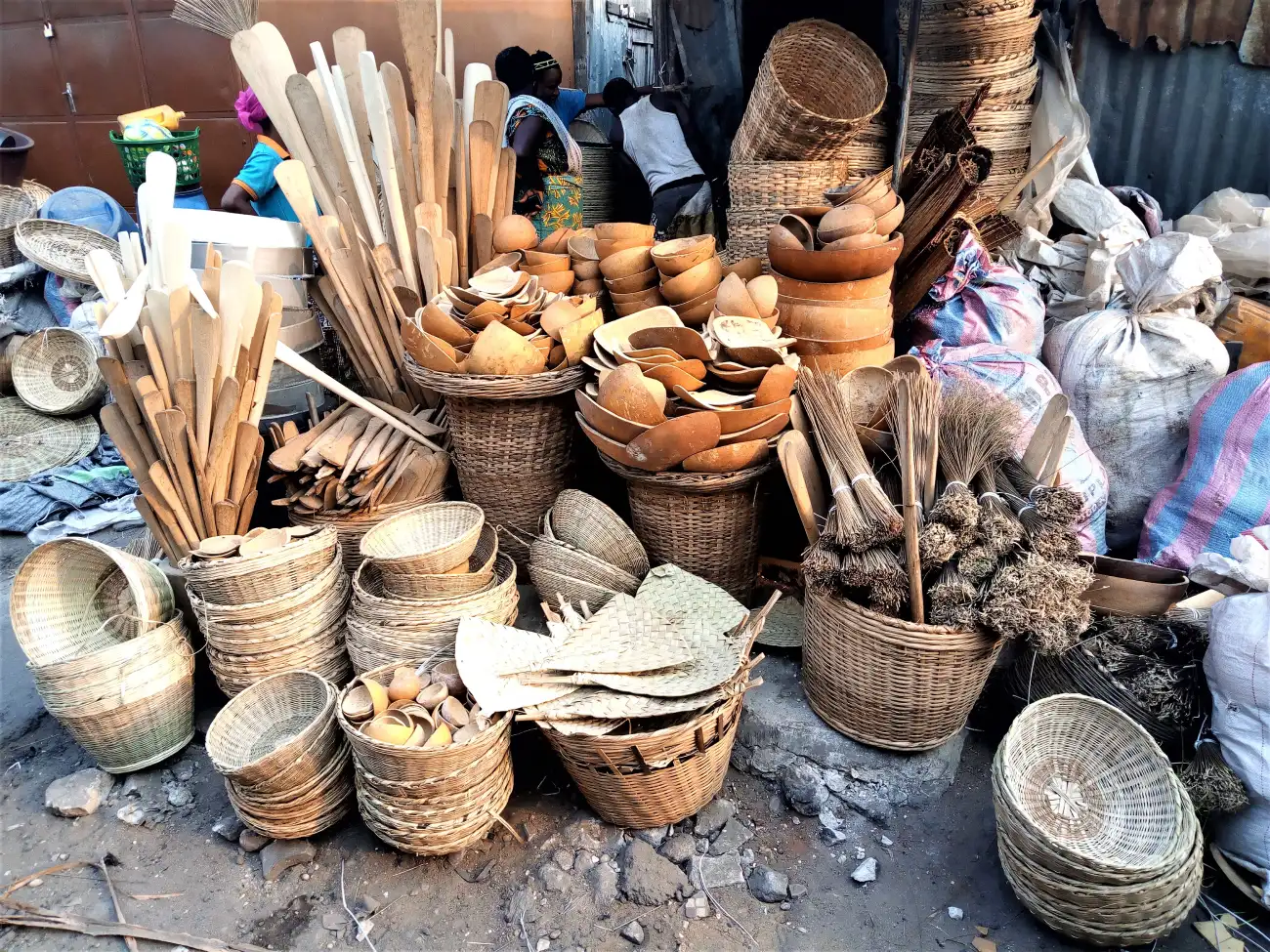
The concept is appealing because it doesn’t require redoing your entire living room. Afrohemian favors natural materials, bold textiles, handcrafted objects, and pieces that seem to have been collected over time. Woven baskets, rattan, wood, indigo, ceramics, and touches of color can be enough to change a room’s atmosphere.
The platform also notes a 130% rise in searches for adire fabric, 210% for Berber patterns, and 50% for rattan accent chairs. These figures reflect trends observed internationally on Pinterest: they don’t mean all interiors must look alike, but they show a marked return to more textured, personal, and less standardized decor.
In Benin, this aesthetic becomes especially interesting when it builds on what already exists: textile craftsmanship, basketry, woodwork, artisanal objects, and deep colors. The idea isn’t to create a generic “African” decor, but to give space to pieces chosen for their material, story, and use.
This artisanal foundation is very real: UNESCO describes Porto-Novo’s craftsmanship as highly diverse and organized, with 42 trades, notably citing families specialized in basketry and pottery.
Start with a single standout piece
The easiest way to adopt Afrohemian is to begin with an object you already love. A large wall basket, a rattan chair, a carved stool, a fiber lamp, or an indigo textile can serve as a starting point.
There’s no need to pile on five different patterns from day one. A strong piece works better when it has room to breathe. On a light wall, for example, two or three well-spaced woven baskets can create more impact than an overcrowded arrangement. On a neutral sofa, a single artisanal fabric cushion can be enough to introduce color.
Mix indigo with earth tones
Indigo is particularly easy to work with in a West African interior. It adds depth without being as harsh as black and pairs well with beige, sand, brown, terracotta, or natural wood.
For an elegant version, reserve blue for a throw, cushions, a table runner, or a textile panel, then keep larger surfaces calmer. The Kanvo can play the same role: rather than covering an entire room, a framed strip, a cushion, or a throw allows the textile to enter the decor with restraint.
Focus on materials before patterns
The Afrohemian spirit relies as much on touch as on prints. Raffia, rattan, jute, sisal, raw wood, thick cotton, and clay create immediate warmth. In an already colorful room, it’s better to emphasize textures and keep patterns more subtle.
A basket placed on the floor can become storage for throws, a mat can define a reading nook, and a wooden tray can gather candles, books, or small objects. It’s often this utility that prevents the trend from turning into a showroom display.
Choose craftsmanship with intention
A beautiful artisanal piece benefits from remaining identifiable. When you know its origin, the technique used, or the maker, it becomes more than just a decorative accessory. It’s also a way to avoid turning cultural references into anonymous patterns.
When buying, it’s better to favor a few objects you’ll keep for a long time rather than accumulating many small, incoherent pieces. A woven mirror, pottery, a basket, a sculpture, or a textile can endure changing trends far more easily than a decor built entirely around a seasonal fad.
Leave space: the detail that makes the style chic
Afrohemian loves layering but not visual clutter. To keep an elegant result, you can keep walls and main furniture relatively simple, then focus personality on three areas: a wall, a seating corner, and a table or console.
Related Articles
 Decor 2026: the “collected over time” style replaces overly perfect interiors
 Whimsymaxxing: Why Rhinestones Are Making a Comeback Everywhere, and How to Embrace the Trend Without Overconsuming
 Back to School in Benin: The Viral Anti-Harassment Exercise on TikTok to Try with Your Child
 September Reset: 5 Simple Adjustments to Take Control of Your Return
Comments
Comments load when you reach this section.