
Creation of an upper house in Benin: Jean-Baptiste Elias welcomes it
The president of the Front of National Organizations Against Corruption (FONAC), Jean-Baptiste Elias, took part this weekend in the annual symposium of the Institute of Artisans of Justice and Peace (IAJP).

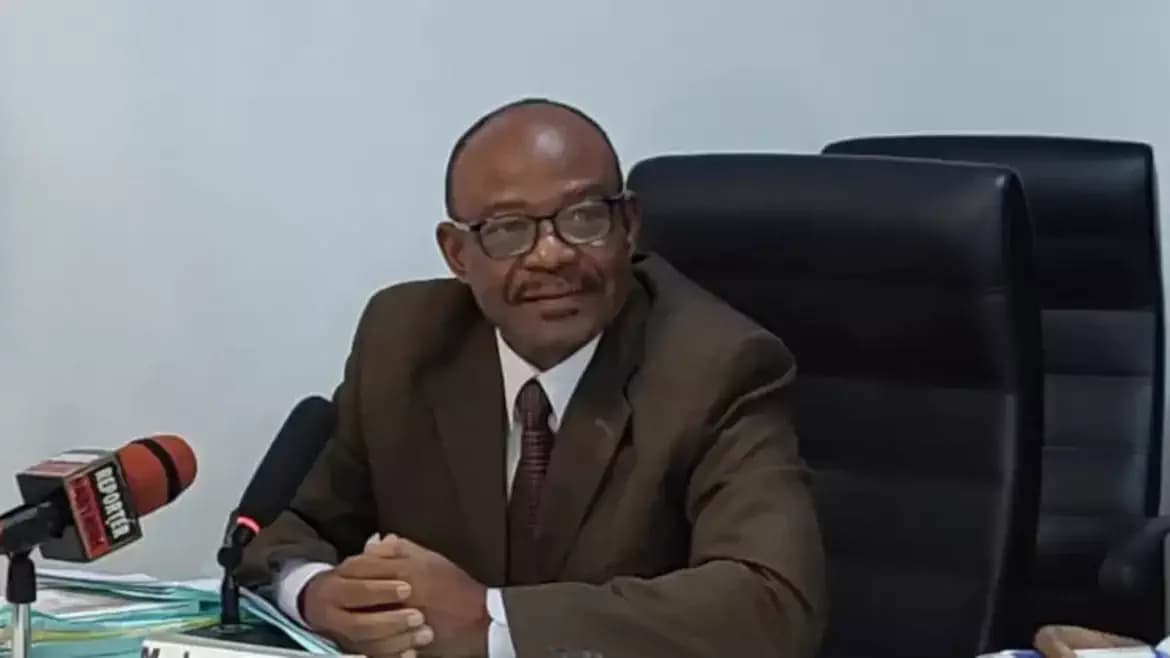
During the proceedings focused on the theme Peaceful elections, political alternation and social cohesion, guarantors of national unity, the president of FONAC spoke about an issue stirring the national scene: the creation of a Senate in Benin.
In his remarks, Jean-Baptiste Elias reminded that Benin remains free to choose its institutions, while stressing the need for coherence between an organ’s title and the mission entrusted to it. To support his point, he said he studied the institutional setup of 188 countries and found that 107 of them do not have a Senate.
The man, known for taking positions based on verifiable data, encouraged the audience to check his figures, stressing that he never makes a claim without proof.
Addressing the link between governance, the fight against corruption and institutional structures, Jean-Baptiste Elias cited analyses from Transparency International. He recalled that Cape Verde, often presented as the least corrupt country in West Africa, does not have a Senate.
He broadened his comparison to other African states ranked higher than Benin: the Seychelles, Mauritius and Botswana, countries that also operate without an upper chamber.
He notably mentioned the case of Botswana, which opted for a different model with the establishment of a Council of Chiefs, a structure adapted to its sociopolitical context.
The president of FONAC also cited examples in North Africa, notably Morocco and Tunisia, to illustrate the diversity of institutional choices across the continent. Through these parallels, he invites reflection on the relevance of adopting the term “Senate” in the Beninese configuration, a concept inherited from a specific institutional tradition.
Jean-Baptiste Elias announced that an official FONAC statement on national current events will be published in the coming days, a sign that the debate over the new institutional architecture is far from over.

Comments
Comments load when you reach this section.