
Cocoa: the Côte d’Ivoire-Ghana alliance wants to expand its influence in Africa
Côte d’Ivoire and Ghana, already engaged in coordinating their cocoa policies, are looking to involve Nigeria and Cameroon in a common approach. The goal: to better defend the income of African producers against the fluctuations of the global market.

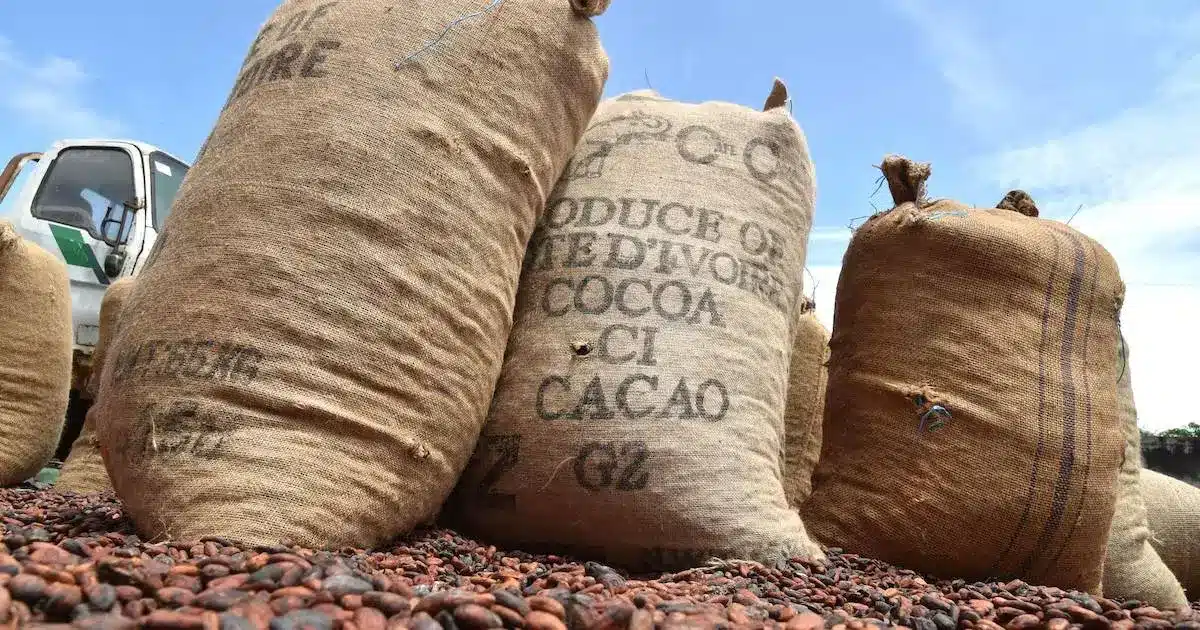
African cocoa is back at the center of an economic battle. A summit dedicated to creating value in the sector is scheduled for Tuesday, July 14, in Abuja, Nigeria, with the expected participation of Côte d’Ivoire, Ghana, Cameroon, and the host country. The idea emerging is one of broader coordination among the continent’s major producers, as price volatility continues to undermine their incomes.
Côte d’Ivoire and Ghana have already begun this rapprochement. In mid-June, the two countries announced their intention to harmonize their campaign calendar and strengthen consultations between their regulatory bodies before setting the prices paid to producers. They also agreed that the 2026-2027 campaign would begin on September 1 in both countries.
This cooperation does not start from scratch. The Côte d’Ivoire-Ghana Cocoa Initiative has existed for several years and aims to increase the negotiating power of both states in a sector where they jointly hold a significant share of the global supply. However, the project to expand to Nigeria and Cameroon would give this alliance another political significance.
An unstable market, producers under pressure
The search for a common front comes after months of severe turbulence. After reaching exceptionally high levels in 2024, international prices have dropped sharply in 2025 and 2026. In Ghana, this decline has forced authorities to revise the guaranteed price for producers. COCOBOD currently maintains a price of 41,392 cedis per ton for the small campaign of 2025-2026, which is 2,587 cedis for a 64-kilogram bag.
For the producer governments, the problem is twofold: support the income of growers while avoiding disconnecting domestic prices from the reality of the international market. In February, Ghanaian authorities announced a reform of the sector’s financing with the goal of increasing local cocoa processing to at least 50% of production starting from the 2026-2027 campaign.
Beyond the price of the bean, the challenge is the role of Africa in the value chain. The continent produces the bulk of the world’s cocoa but captures only a limited share of the revenues generated by chocolate and processed products. An expanded alliance could have more weight in discussions related to pricing, local processing, traceability, and environmental requirements imposed by export markets.
The decisions that may come out of the discussions in Abuja remain to be specified. However, the dynamic initiated by Abidjan and Accra confirms that the main African producers are now seeking to no longer leave it to buyers and industrialists to define the market rules.


Comments
Comments load when you reach this section.