
Cameroon: Paul Biya adjusts his communication in light of his long absence from the country.
The issuance of presidential decrees aims to demonstrate that Paul Biya is still in office, while his prolonged absence from Cameroon raises questions about a potential vacancy in power. Since June 7, 2026, the head of state has been outside the country without any public appearance or direct speech.

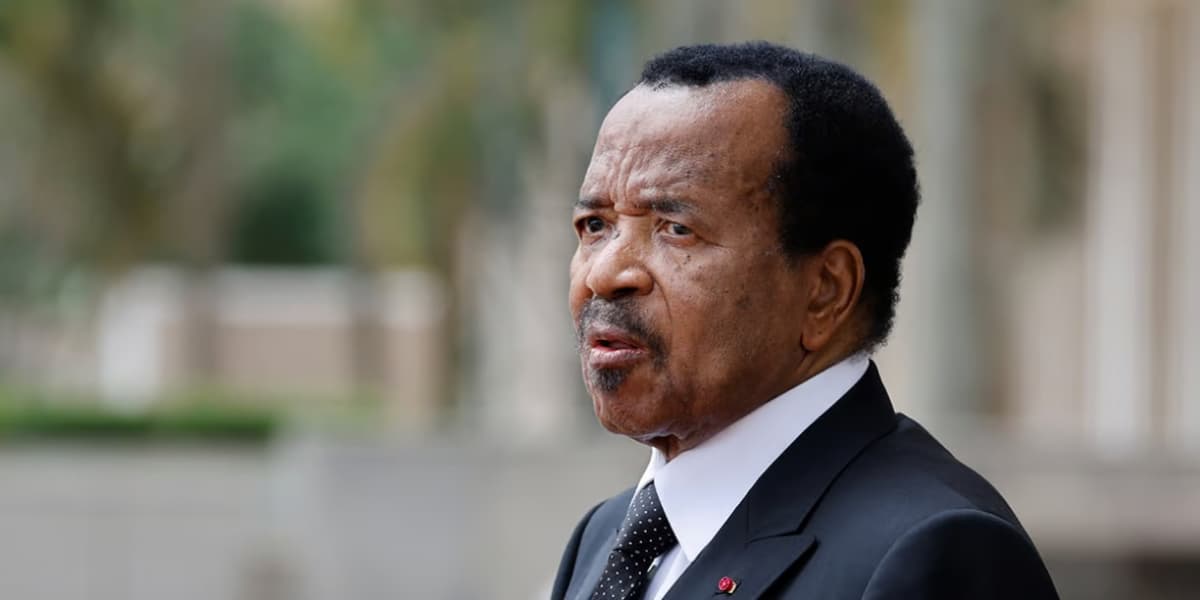
On August 3, several presidential acts promoted five colonels to the rank of division general and organized movements of military personnel within the delegated ministry at the presidency in charge of Defense. On July 28, another decree had admitted a general to the “second section,” a term used to denote the retirement of general officers in Cameroon.
The economic sector is also involved in this official activity. On July 30, Paul Biya authorized the Minister of Economy, Planning, and Territorial Development to sign financing agreements with the Islamic Development Bank amounting to around 28 billion CFA francs.
These decisions come as rumors about the president’s health multiply. His supporters are trying to reassure the public about his unusually long stay in Switzerland, but Paul Biya remains absent from screens and silent, a situation that contrasts with methods used in the past.
A Communication Based on the Continuity of the State
During previous periods of doubt, the Cameroonian power prioritized staging presidential appearances or broadcasting direct messages. In the second half of 2025, while Paul Biya was preparing for the presidential election and appeared physically absent, meetings with high-ranking personalities, including foreign diplomats, were organized and extensively covered by the media.
In June 2004, after a rumor announcing his death in Switzerland, the presidency published an official statement. Paul Biya then returned to Yaoundé, where he famously told those interested in his funeral to meet him in twenty years’ time.
In 2026, the strategy seems to have changed. “The logic has shifted. The body of the head of state is no longer at the center of the narrative; it’s the permanence of the state that takes over,” believes Joseph Keutcheu, a teacher at the University of New Brunswick in Canada.
According to this analyst, decrees, appointments, diplomatic letters, and other official acts must give the impression of an administration that continues to function. “The power seeks to make the institutions speak more than the man,” he explains, believing that the message is to show that “the machine is running” despite the president’s absence.
The Weight of Age and the Opacity of the Stay
Joseph Keutcheu links this evolution to several factors, starting with the president’s advanced age of 93 years. Relying on public appearances intended to demonstrate his physical vigor has become risky, while modern technologies allow for remote governance or the impression of it.
This strategy would also, according to him, shift the debate. Instead of directly responding to medical inquiries, the power puts forward administrative continuity and actions taken in the name of the head of state.
A communication specialist, who teaches at a Cameroonian university, observes that Paul Biya no longer shows up as he used to during public activities or audiences. “He stays silent, he may give instructions, and then he appears in official circumstances, physically frail, but still present,” he analyzes, situating this change since 2018.
For Thomas Atenga, a professor in the communication department at the University of Douala, this new approach chiefly reflects the weakening of the official voice. In a context of lost trust in authorities, statements meant to reassure the population belong, according to him, to a “form of incantation, even divination,” as the president’s stay in Switzerland approaches two months.
Persistent Questions
The effectiveness of this institutional communication remains debated. Joseph Keutcheu considers it to be more of a crisis management through the image of the state than a direct response to the population’s concerns.
This method may help maintain the apparent functioning of institutions in the short term, but its credibility will depend on the duration of the absence, the coherence of official statements, and the level of trust still placed in the power. For the political scientist, the accumulation of administrative acts is no longer entirely sufficient in the face of public opinion that demands more transparency.
Thomas Atenga states that the reactions observed on social media illustrate the bewilderment of part of the population. Government members’ interventions are often ridiculed, while a common question often arises: what is being hidden and for how long.
The return of Paul Biya to Cameroon, announced as imminent by the government spokesman, René Emmanuel Sadi, remains highly anticipated. The same goes for the formation of a new government announced by the president at the end of 2025 “in the coming days,” as well as for the appointment of a vice president of the Republic.
Comments
Comments load when you reach this section.