
After Venezuela, does AES have any reason to worry about facing Trump?
The American military intervention in Venezuela, aimed at “capturing” President Nicolás Maduro, has revived many questions well beyond Latin America. In West Africa, and more specifically in the space of the Alliance of Sahel States (AES), this episode fuels a climate of suspicion toward Donald Trump’s foreign policy, marked by muscular rhetoric and unilateral decisions.

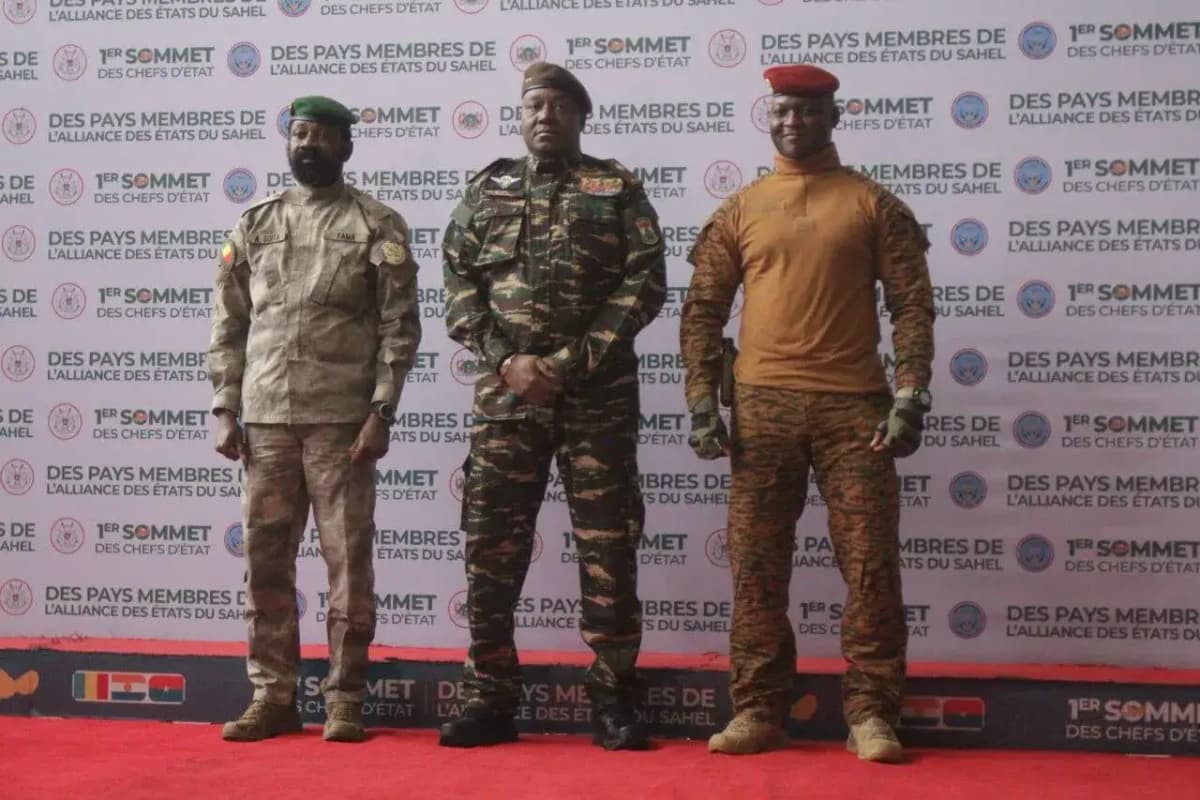
Before the operation in Venezuela, Washington had already carried out targeted strikes in Nigeria, officially to neutralize a terrorist column suspected of preparing attacks against Christians. This action, conducted without prior public consultation, had sparked regional tensions. In Niger, the authorities had reacted by calling for a general mobilization against any external aggression, a sign of increased nervousness in an already deteriorated security context.
In recent days, the AES has decided to ban the entry of American nationals into its community space, in response to restrictions imposed by the Trump administration. This highly symbolic political measure is part of a dynamic of progressive rupture with Western partners, initiated after military coups in the region and the departure of certain foreign forces.
From then on, one question arises: could these tensions push Washington to seek pretexts to act against Sahelian leaders, similar to what happened in Venezuela?
“The dangers to America aren’t really in Africa.”
To shed light on this debate, Enjeux d’Afrique interviewed Professor Ousmane Sène, a specialist in American studies and director of the West Africa Research Center (WARC), based in Dakar.
According to him, the AES countries do not currently present a major strategic threat to the United States. “Whether militarily, politically, or economically, these states do not generate issues that would make the rest of the world dependent on them,” he believes. Even on the sensitive issue of uranium, often cited for Niger, the professor reminds that “Niger is an important producer, but it is not the only one,” and does not constitute a direct threat to American integrity or security.
For Ousmane Sène, the comparison with Venezuela quickly finds its limits. Unlike Nicolás Maduro, no African leader, including within the AES, openly and deliberately displays hostility towards Washington. “There is no African president who fits the profile of a sworn enemy of the United States,” he emphasizes, noting the absence of direct confrontational stances against American policy.
Even recent frictions, such as those related to the withdrawal of American military bases or the tightening of access conditions to the territory, are more about sovereign choices than direct ideological confrontation.
“Security mobilization or internal consolidation logic?”
The call for general mobilization launched by Nigerien authorities after the American strikes in Nigeria has nevertheless fueled concerns. Some analysts see it as a sign of a real fear of external intervention. Professor Sène invites a more nuanced reading: “A leader coming from a coup d’état has every interest in alerting the population about external threats, real or supposed, to consolidate his internal legitimacy.”
According to him, emphasizing an American danger can also serve to unite public opinion around military regimes and justify the strengthening of security cooperation within the AES.
Finally, regarding international reactions to the American operation in Venezuela — notably Russian and Chinese condemnations — Ousmane Sène downplays their significance. These positions are more about diplomatic posturing than a real desire for escalation likely to ignite other regions, including the Sahel.



Comments
Comments load when you reach this section.